
Stalking Trousers vs Shooting Breeks: What Works Better in Real Field Conditions?

Stalking trousers vs shooting breeks for wet ground, rough terrain, stalking, shooting and hard field use.
Real ground does not care what looks smart. The stalking trousers vs shooting breeks: what works better in the real field is a debate that often gets too polite. People talk about tradition, proper shooting kit, old estate style, smart dress and all that. Fair enough. It has a place.
But wet ground does not care about tradition.
If the field is soaked, the bracken is dripping, the mud is sticky and the wind is biting your legs, you find out fast what works. Real field conditions are not a clean product page. They are wet knees, cold backside, mud on your boots, thorns pulling at fabric and a long walk back when the weather turns ugly.
Shooting breeks still have a job. Nobody serious should say they are useless. For driven game shooting, especially with long shooting socks and Wellington boots, they can be tidy, comfortable and suitable. They stop trouser fabric bunching inside rubber boots. That matters when you are standing on a peg for extended periods.
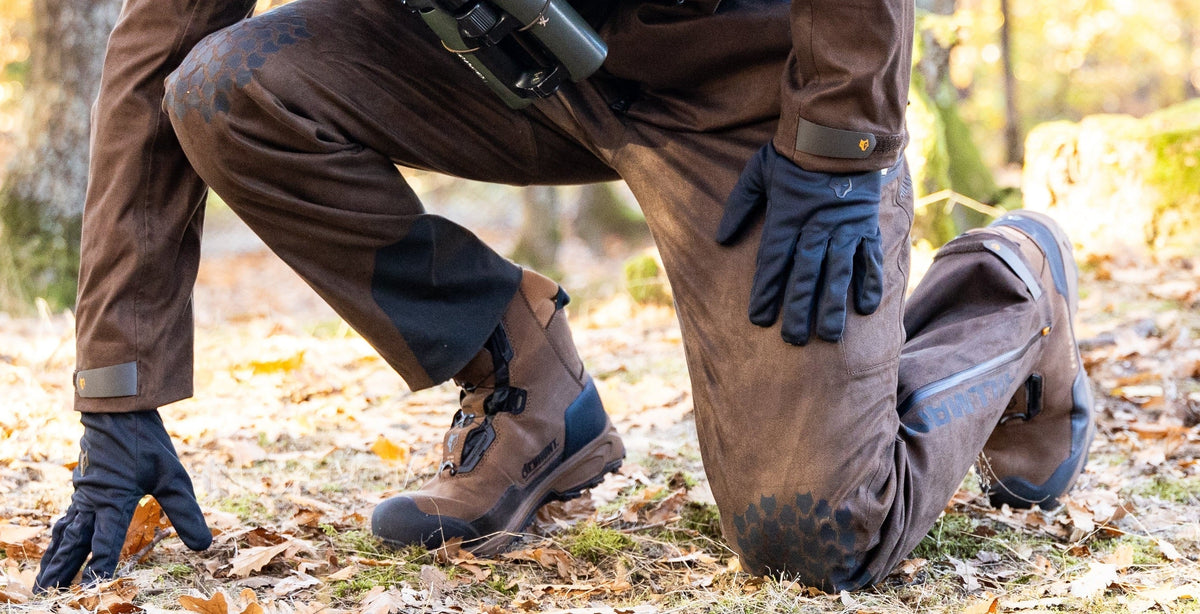
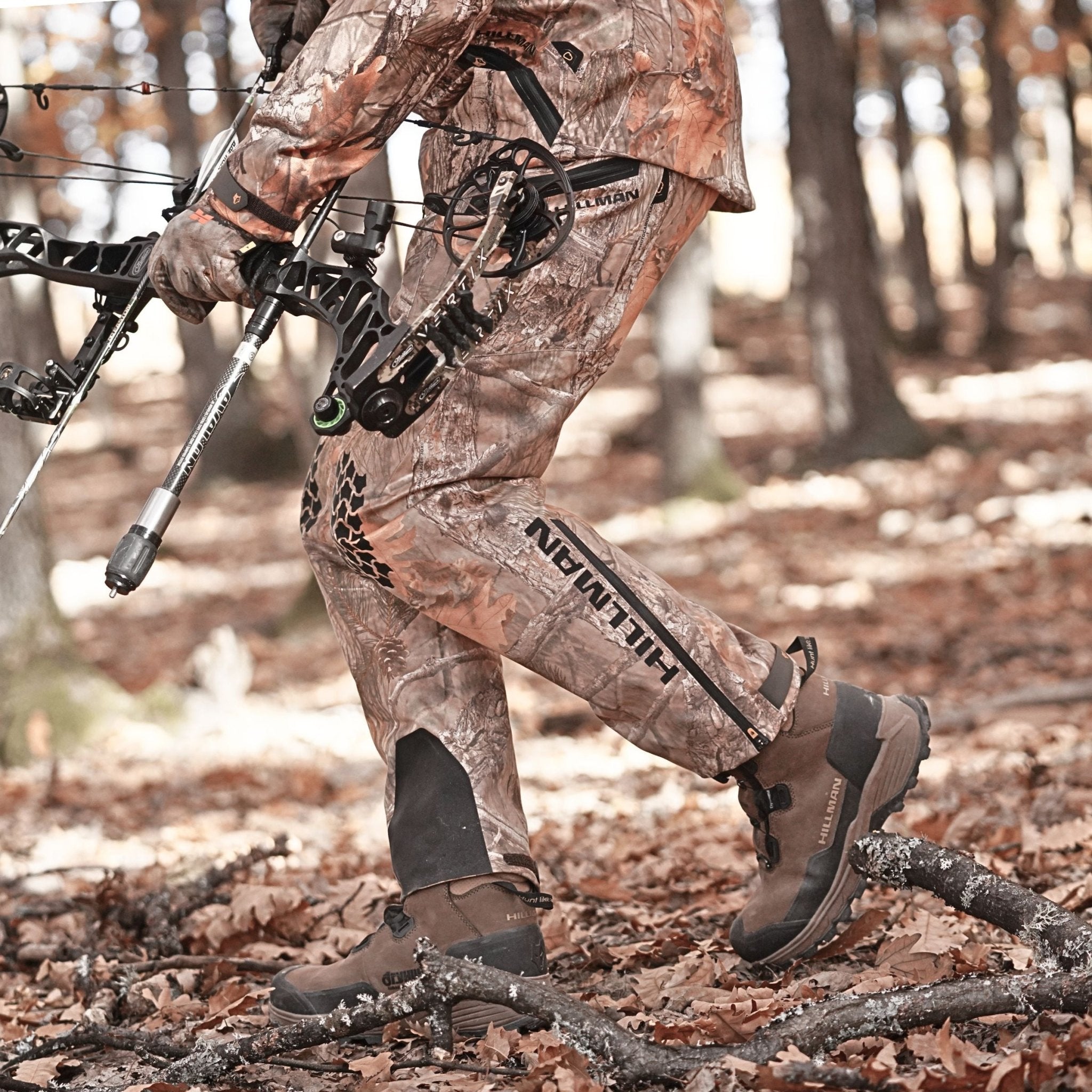
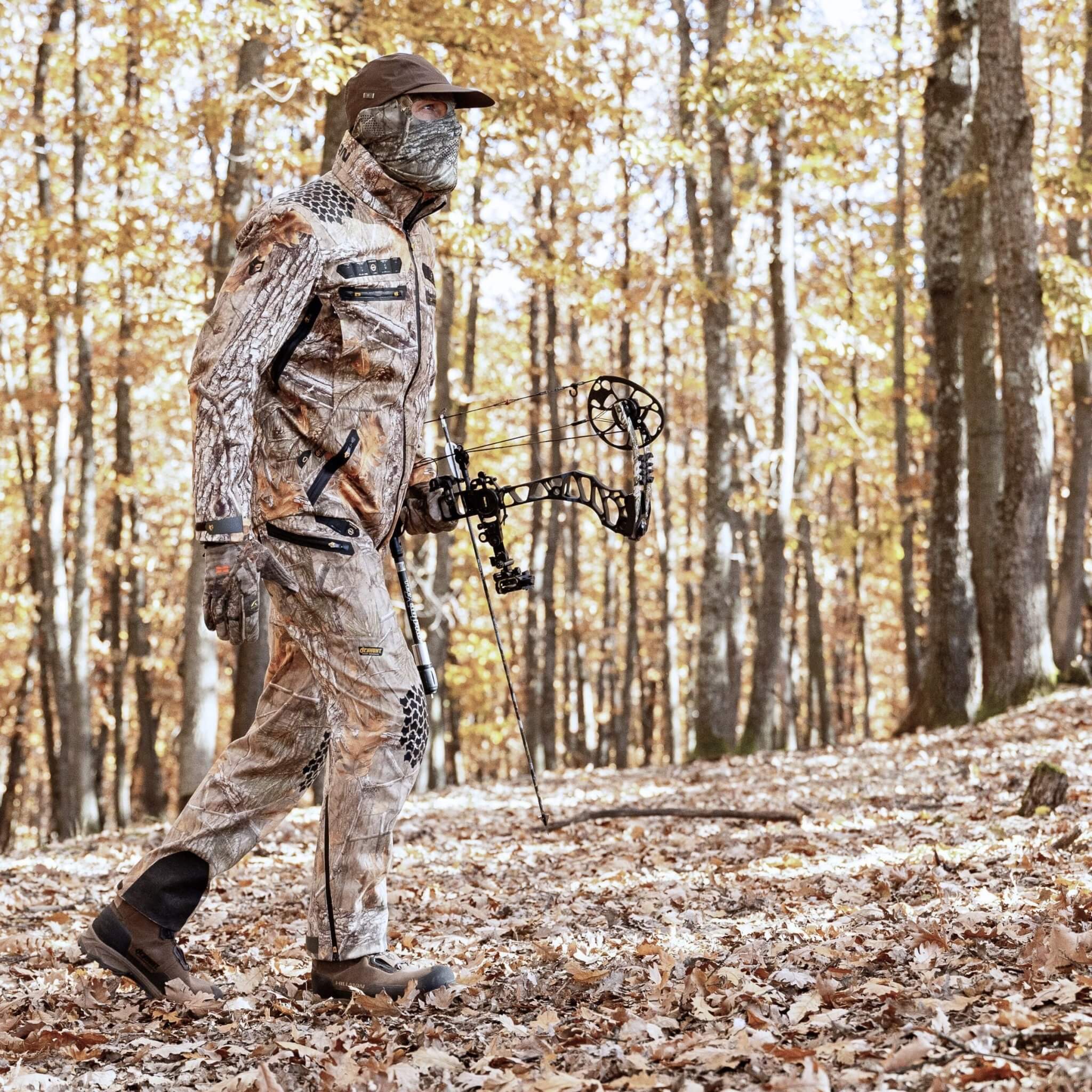
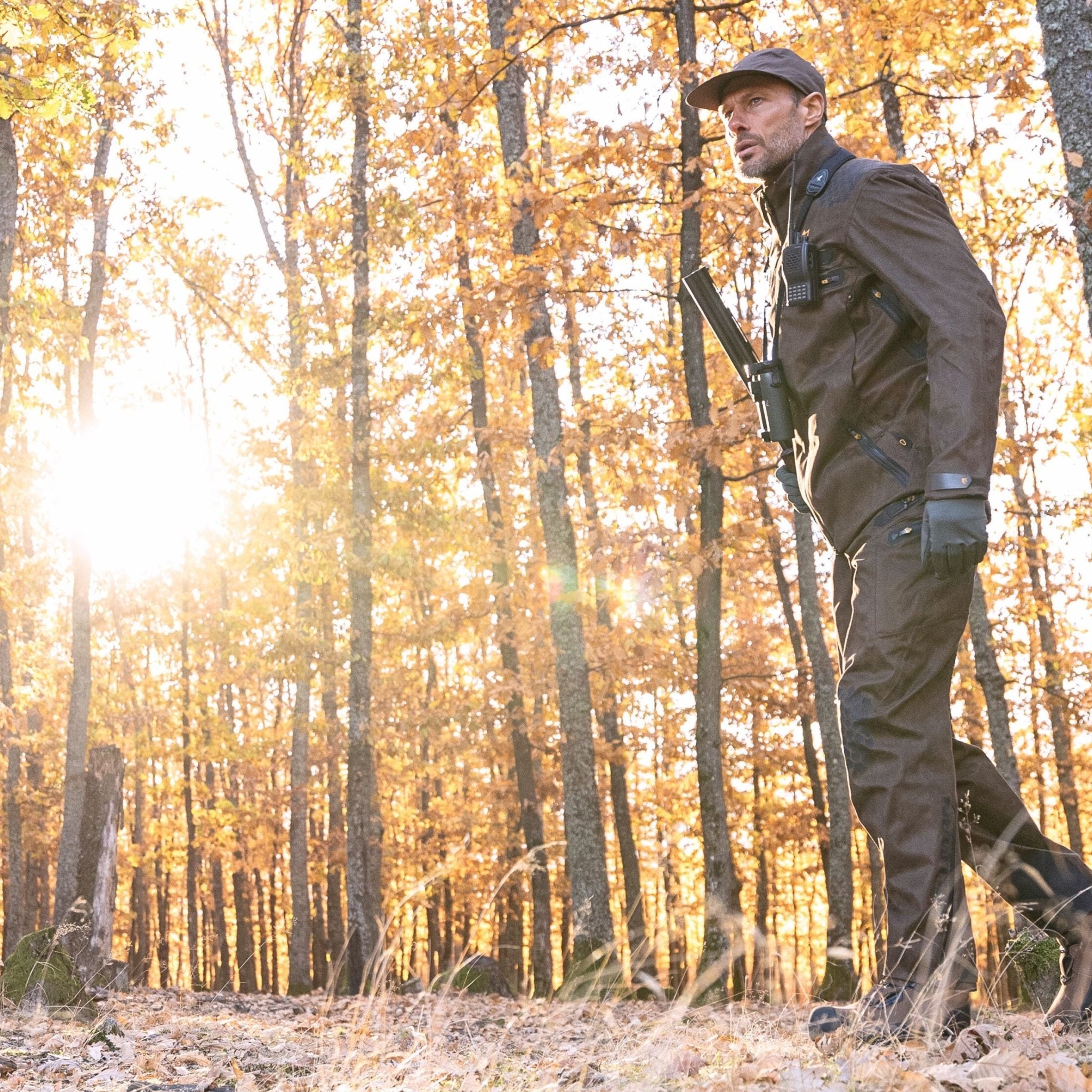
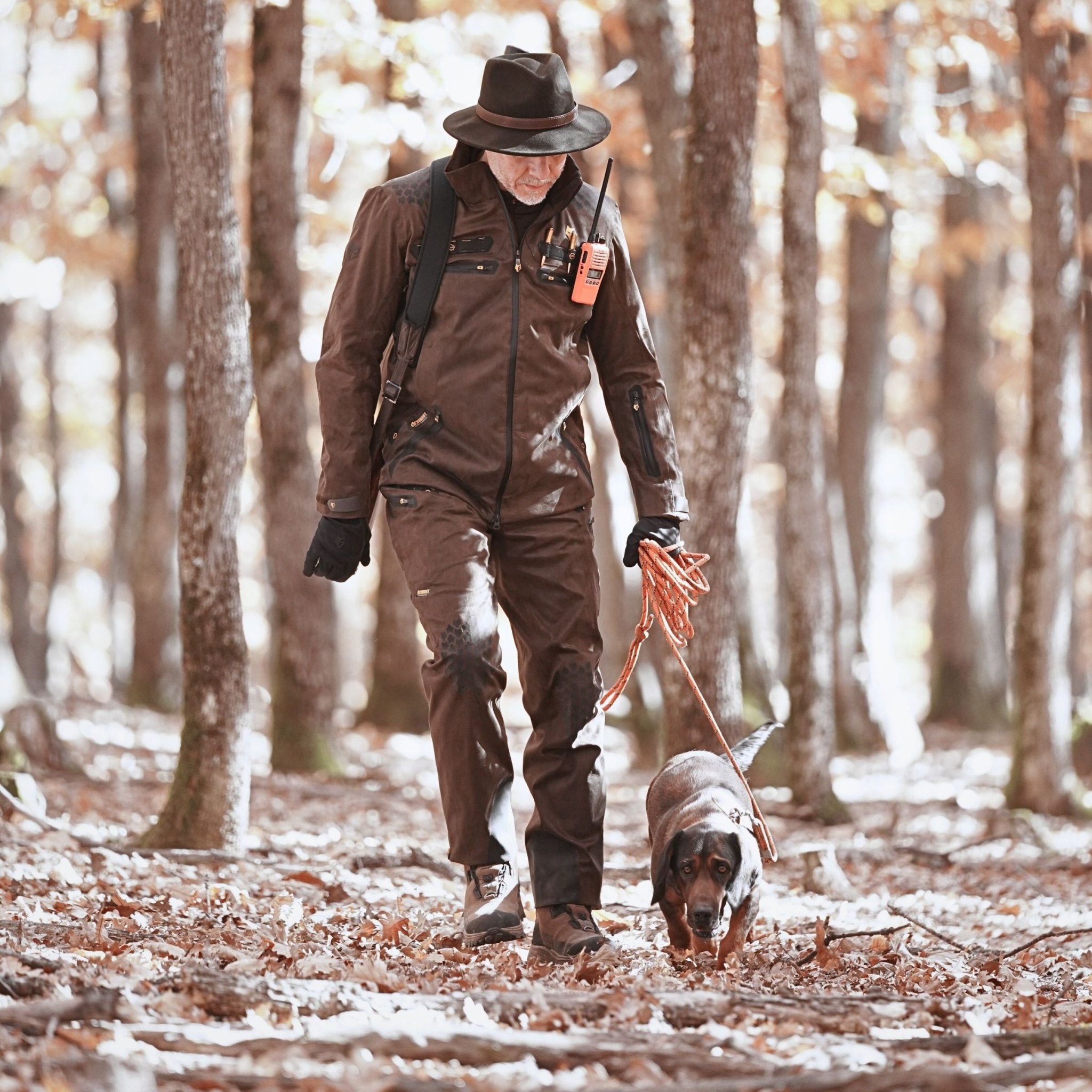
But stalking trousers are built for a rougher day. They are made for movement. Crawling. Kneeling. Climbing. Sitting in a high seat. Crossing wet ground. Pushing through dense undergrowth. Walking through rain, mud, thorns and cold without your clothing becoming the problem.
That is where the difference starts showing.
Wet Conditions Show the Truth Fast

Waterproof trousers matter most when the rain is not dramatic, just steady enough to ruin your day slowly. That is often worse than a big downpour. It creeps in.
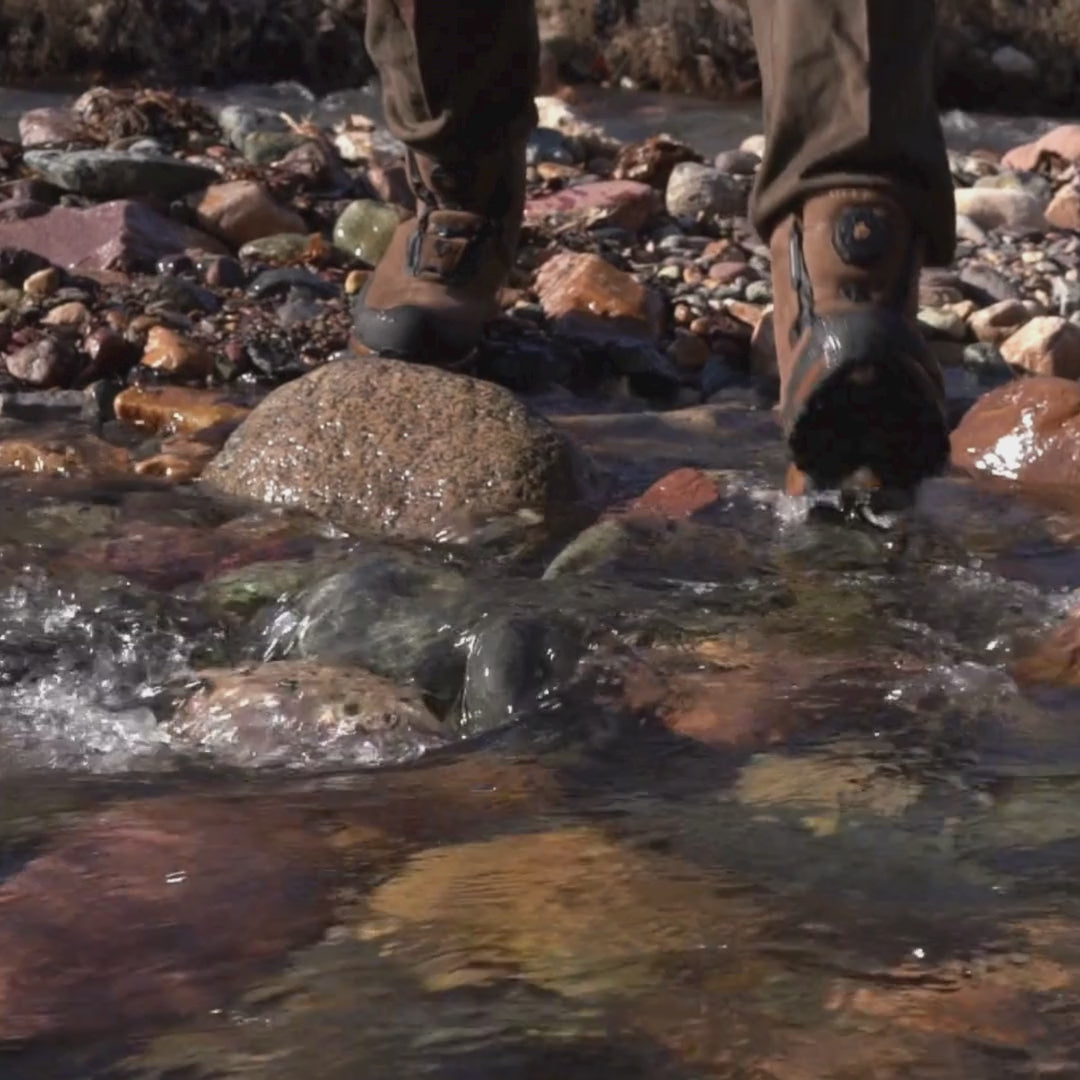
Wet grass. Mud. Bracken. Rain. Low cover. Damp woodland edges. Streams. Coastal marsh. Sticky tracks. It all works against your trousers.
And the wet does not only come from above. It comes from the ground. It comes from vegetation. It comes from brushing past every soaked thing around you. If your lower legs are not properly covered, you feel it soon enough.
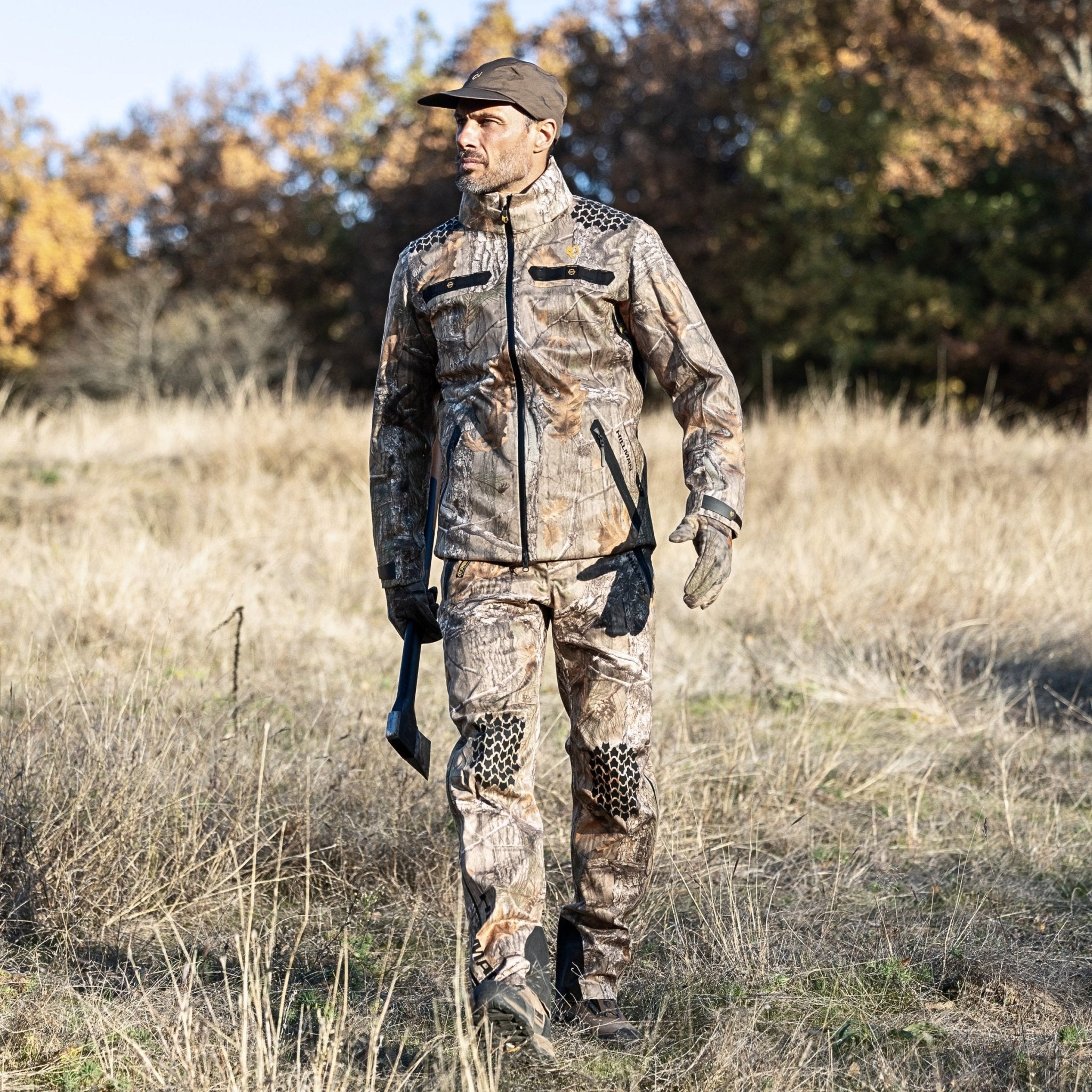
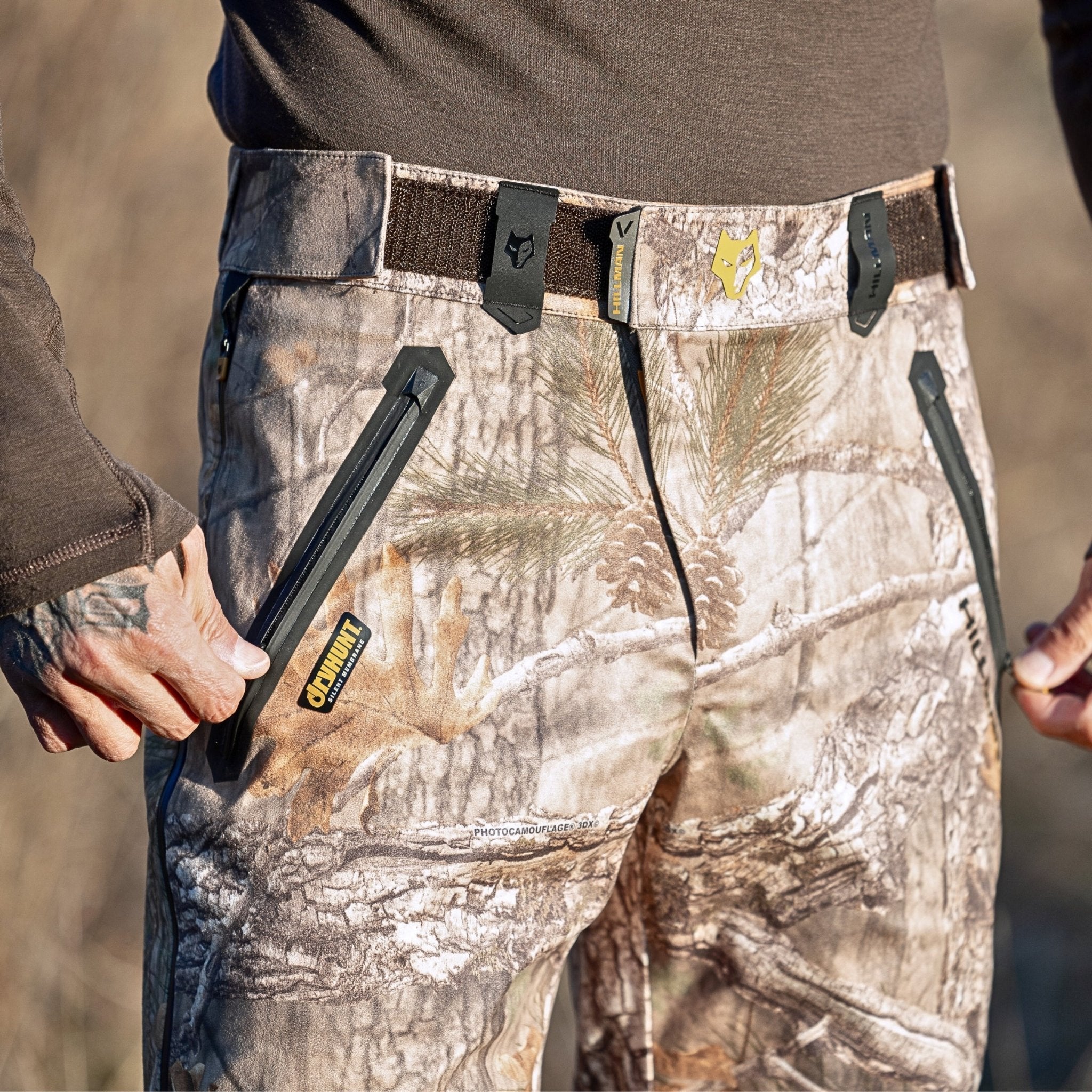
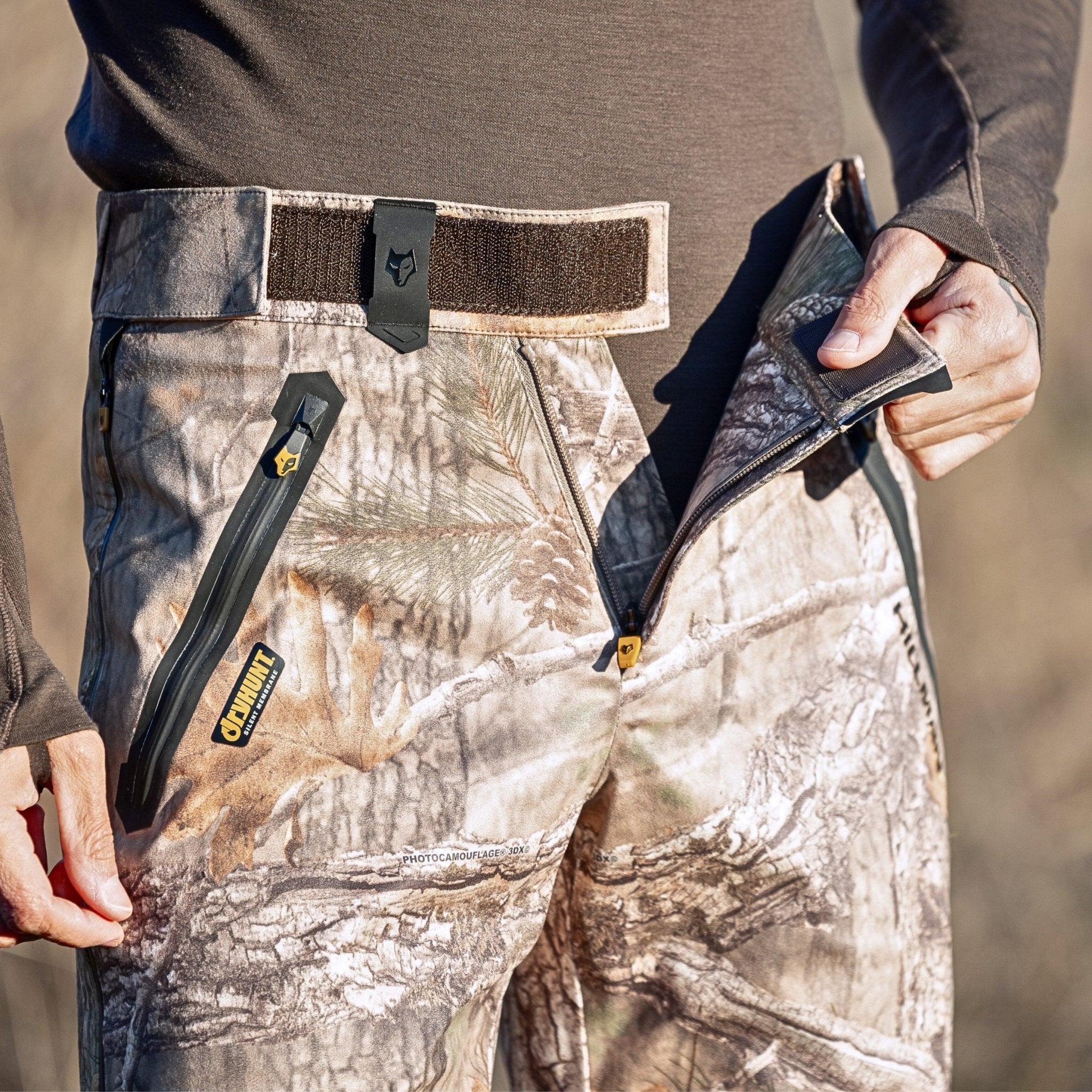
Modern stalking trousers usually handle this better. A good pair has waterproof protection, a water-repellent outer fabric and enough breathability so you do not boil inside them once you start walking hard. Some use GORE-TEX, Dryhunt or similar waterproof and windproof systems. Others use different membranes and cutting-edge technology. The point is simple: repel water, block rain, let moisture escape.
Breeks do not cover the full leg. That is the whole design. In clean driven shooting, fine. In claggy wet conditions, not so fine. The stockings take the mud, the wet and the punishment. Once they get heavy or soaked, comfort drops fast.
Full-length hunting trousers give better coverage against ticks, thorns, biting insects, wet grass and mud. For woodland stalking, lowland stalking, rough shooting or any day where you are pushing through cover, that extra protection is not some tiny detail. It can save the day from becoming miserable.
Shooting Trousers Still Have Their Corner

Shooting trousers are not all one thing. Some are old-school. Some are more modern. Some sit between smart field clothing and proper outdoor trousers.
Men's shooting trousers are often made to work with a shooting jacket, waistcoat, boots and the rest of the kit. They should look smart, yes, but they still need to handle weather, mud and cold.
Good shooting trousers designed for field use may have waterproof fabric, warm linings, practical pockets and a durable outer layer. Some come in green, olive, brown or even navy, depending on the shoot and what the shooters prefer.
Breeks are the classic version. Short trousers fastened below the knee. No wet hem dragging in mud. No fabric stuffed badly inside tall rubber boots. No bunching around the calf. On a peg day, that is useful.
For winter game shooting, formal estates, muddy tracks, flat wet ground and traditional driven days, waterproof breeks can still be a solid choice. They look right because that is the setting they were made for.
But that is also the limit.
When the day becomes active, breeks lose ground. Kneeling, crawling, climbing banks, pushing through dense undergrowth or crossing rugged terrain for extended periods is where full-length hunting trousers usually win.
Breeks suit the peg. Stalking trousers suit the mess.
Stalking Trousers Are Made for Moving
A proper pair of stalking trousers should let you move without thinking about them. Simple. Yet plenty of trousers fail right there.
If they slip at the waist, pull across the thigh, tighten around the knees or bunch around the boots, they become annoying. At first it is small. After three hours, it is the only thing you notice.
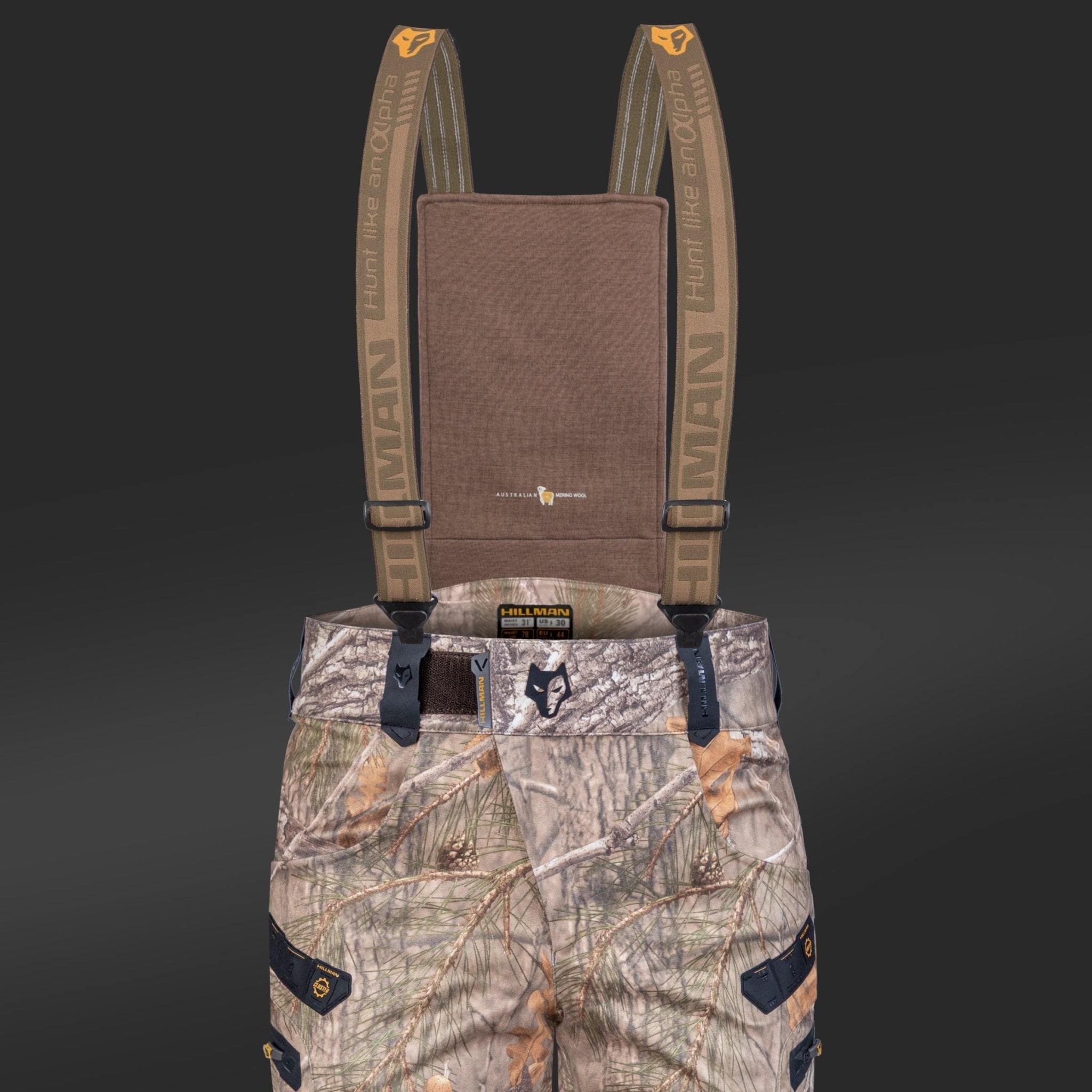
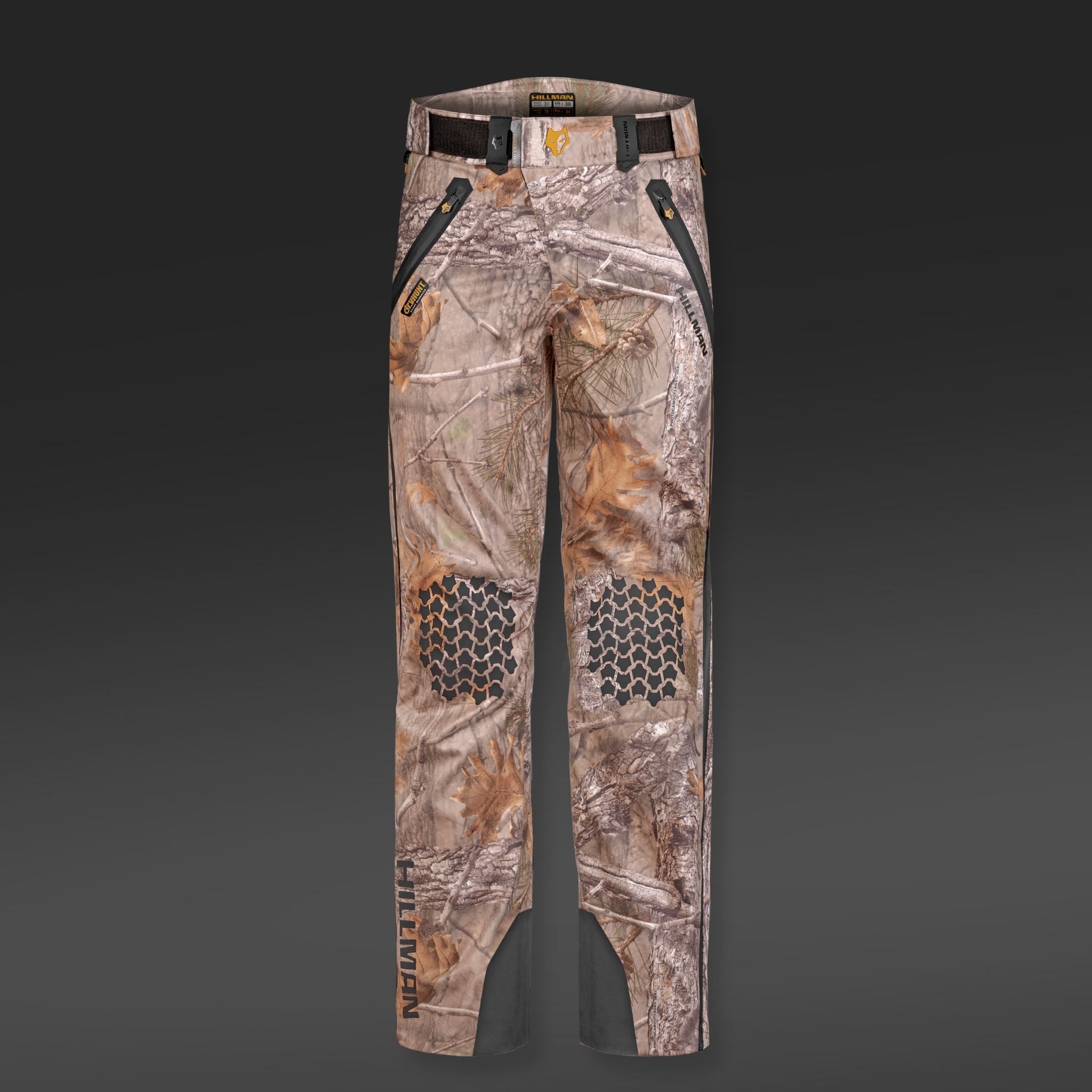
Good hunting trousers for stalking usually have articulated knees, stretch panels, a secure waist, reinforced areas and a cut that follows the body without feeling tight. These features are not decoration. They matter when you crouch behind cover, climb into a high seat, step over fallen branches or crawl into position.
The whole point is unrestricted movement. If the trousers fight your legs when you kneel, they are wrong. If the seat pulls when you climb, they are wrong. If the knees lock up when you squat, they are wrong.
The fabric also needs to be quiet. Silent movement is not optional in deer stalking. If your trousers rustle every time your legs touch, that is not good stalking gear. It might be fine for hiking. It is not fine when deer are close.
Soft outer fabric, low-friction surfaces and careful seams all help. The best stalking trousers do not announce every step. They just stay quiet and do the job.
Colour Helps, But Do Not Get Silly About It

Camo and colour matter, but not in the ridiculous way some people talk about it. Deer are not standing there judging your trouser pattern. They notice movement, shape, shine, sound and smell.
Still, green, olive, brown and natural tones help break up your outline. Navy might be fine for some shooting trousers or estate wear, but for stalking, dull natural colours normally make more sense. In woodland, rough ground or open fields, dull fabric beats shiny fabric.
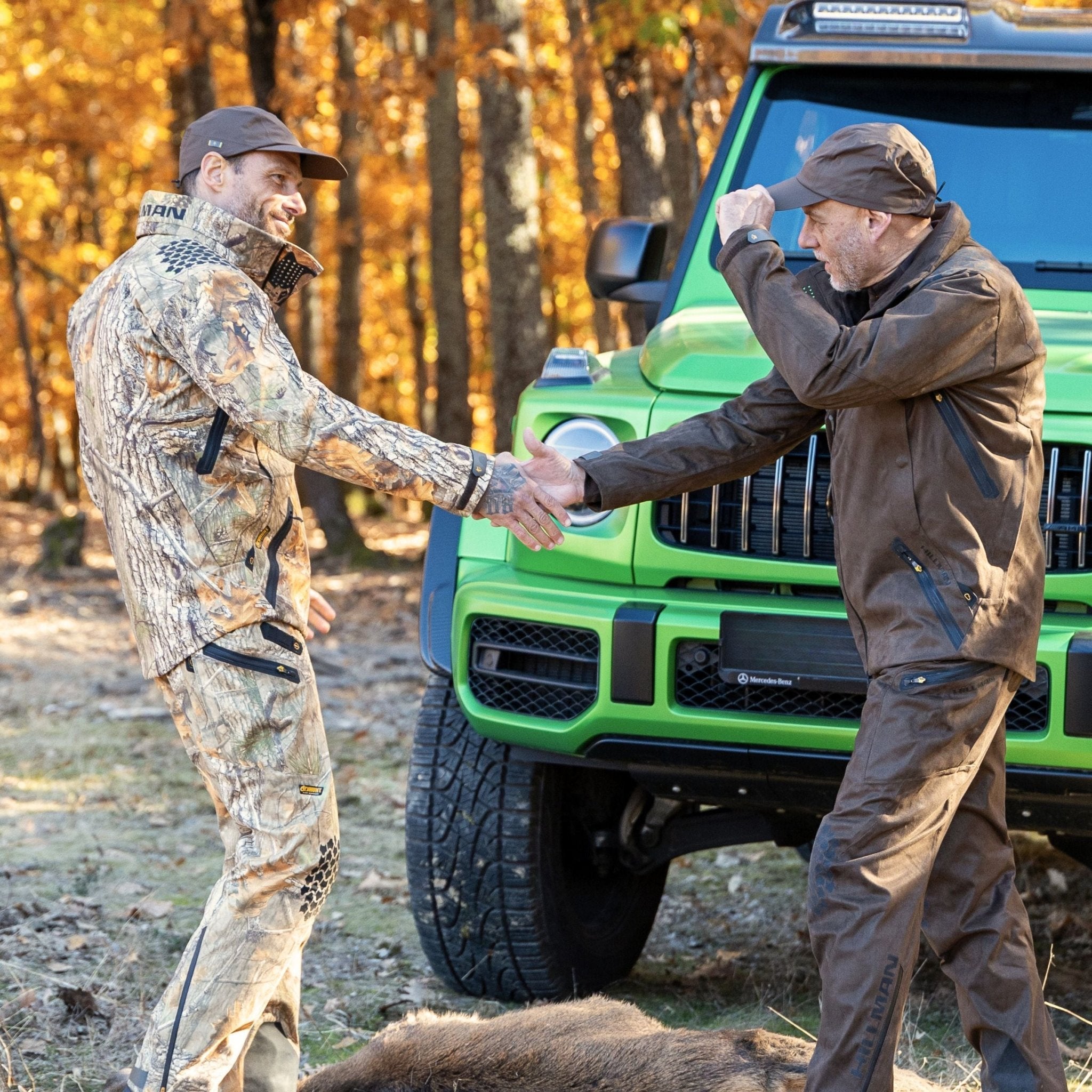
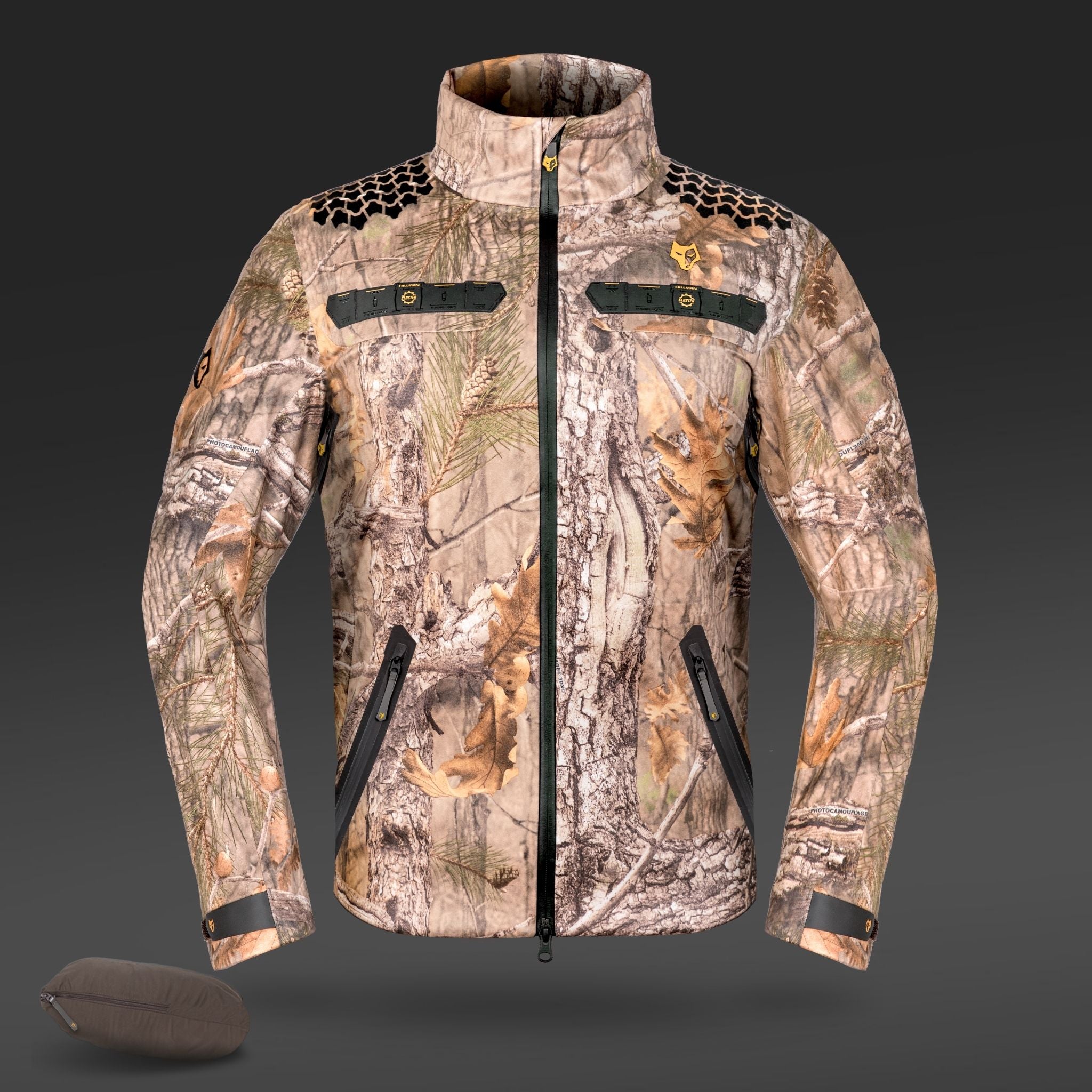
Some modern hunting trousers use technical camo patterns to break the body shape at shorter and longer range. That can help, especially when sitting or kneeling.
But movement is still the killer. A hunter in perfect camo who moves badly is still obvious. A quiet hunter in plain olive trousers can be harder to pick out.
So yes, choose sensible colours. Avoid shine. Avoid noisy fabric. But do not expect camo to fix bad fieldcraft.
Breathability Matters or You Sweat Yourself Wet

Waterproof trousers are only useful if they do not turn into a plastic bag around your legs.
Active stalking builds heat quickly. Walk uphill for ten minutes with gear on your back and you will know about it. Cross wet ground, climb a fence, drag kit, move through cover, and your body temperature rises even in cold weather.
That is why breathability matters. Proper hunting trousers should let moisture vapour escape while keeping rain and wind out. Cheap waterproof trousers often fail here. They block rain, but they trap sweat. Then you are wet from the inside instead.
Ventilation zips are worth having. A thigh zip lets you dump heat without stripping off layers. Moisture-wicking linings help too, especially in mild weather or summer stalking. Quick-drying fabric is useful when showers pass through and the day keeps going.
For high seat work, warmth matters more. Sitting still for extended periods is different from active stalking. Your body heat drops. The seat feels cold. The wind finds every weak spot. Warmer stalking trousers or high-seat trousers make sense there.
For walking and stalking, too much insulation can be a mistake. You want protection, not a furnace wrapped around your legs.
Durability Is Not Just Thick Fabric

Durable trousers are not just heavy trousers. Thick fabric can mean hot, stiff and noisy. That is not always better.
Real durability is in the right places. Knees. Seat. Inner legs. Lower legs. Thigh panels. Those areas take the punishment.
Rugged terrain tests clothing properly. Heather, bramble, stone, mud, wet banks, boot tops, thorns and repeated kneeling all wear fabric down. Reinforced knees and seat areas help. A tough outer layer helps. But the trousers still need to move.
A good pair should resist wear without feeling like armour. It should withstand crawling, sitting on wet banks, brushing past thorns and carrying a small load in the pockets. That is where proper design matters more than just making everything heavy.
Pockets are useful, but only if they behave. Thigh pockets, knife pockets and zip pockets are good when they sit flat and do not slap around. Too many pockets can turn trousers into noisy clutter. The best setup carries small gear without making you feel like you are wearing a toolbox.
Breeks avoid some lower-leg wear because they stop below the knee. But that just moves the punishment to the socks. On clean, driven days, fine. In wet, thorny ground, not so fine.
Fit Around Boots, Waist and Seat Is Not Optional

Fit is boring until it is wrong.
The waist should stay put. The seat should let you sit, climb and kneel. The knees should bend naturally. The lower legs should work with your boots, not fight them.
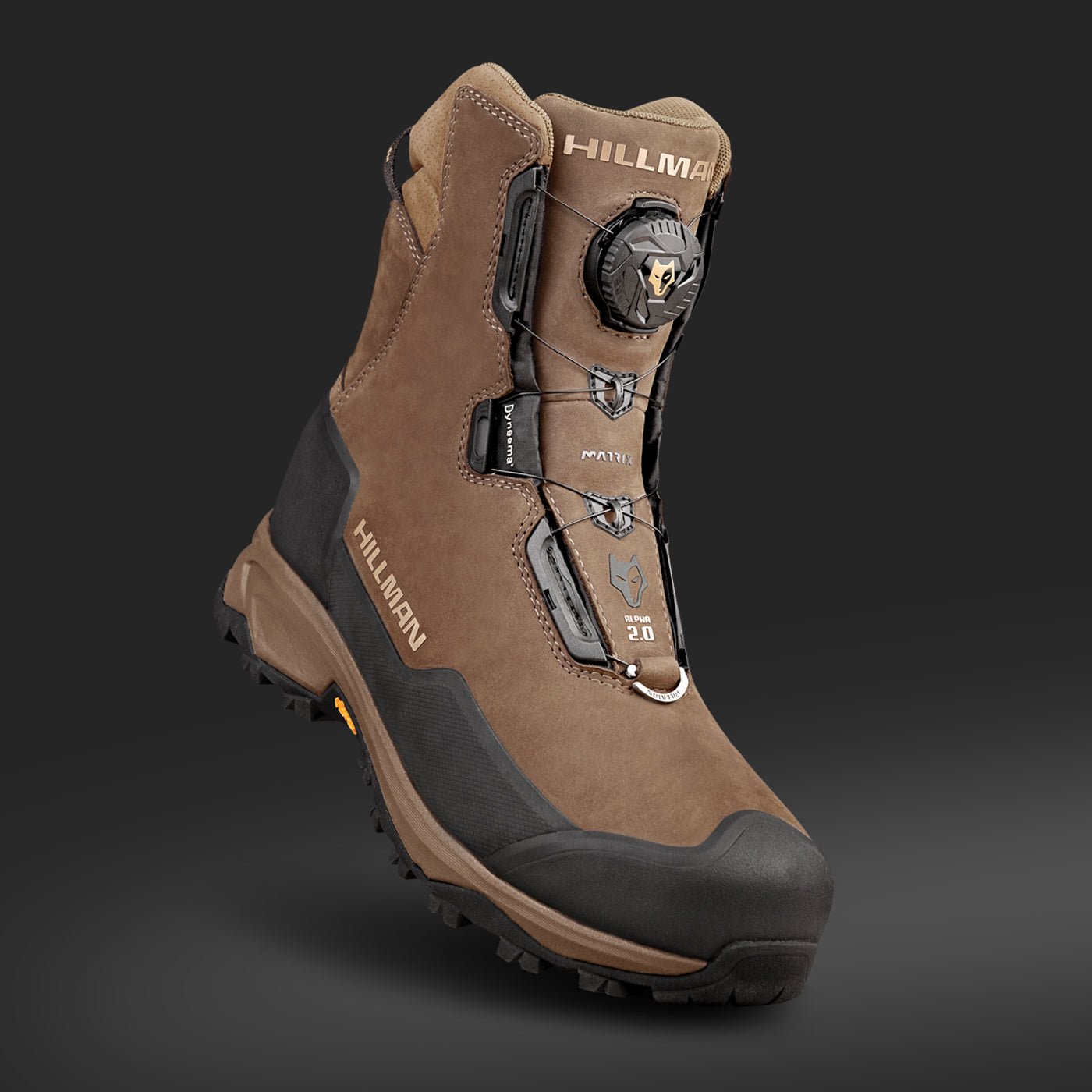
Breeks solve one boot problem very well. They do not bunch inside Wellington boots. For driven shooting, that is a real advantage. Long trousers can be annoying inside tall rubber boots if the cut is poor.
Stalking trousers solve more problems overall. They protect the full leg, work with different boots and give more coverage when crawling or kneeling. A good pair should sit cleanly over or against the boot without dragging too much mud or leaving gaps for wet vegetation.
This is why trying them on properly matters. Do not just stand in front of a mirror. Sit down. Kneel. Squat. Lift your knee. Step up onto something. If the trousers fight you indoors, they will be worse outside.
If you wear trousers for stalking, they need to fit the way your body moves in the great outdoors, not the way it stands still in a changing room.
When Breeks Are the Better Choice

Breeks are the better choice when the day is formal, mostly stationary and built around driven shooting.
They suit peg days. Traditional estates. Winter game shooting. Smart field dress. Tweed jackets. Shooting socks. Wellington boots. They look right because they are right for that job.
They are also comfortable when the walking is moderate and the ground is not too savage. If you are standing on a peg, walking between drives and not crawling through wet woodland, breeks can do the job perfectly well.
Waterproof breeks are useful in wet driven shooting because they keep trouser hems out of the mud and out of the boots. For shooters who prefer tradition and do not need full-leg protection, that is enough.
But they are not the best answer for everything. They are not ideal for tick-heavy summer cover, rough hill stalking, wet woodland, crawling, kneeling or long active days where quiet movement and full protection matter more than looking traditional.
When Stalking Trousers Are the Better Tool
Stalking trousers are the better tool when the day is uncertain.
And most real field days are uncertain.
You might start on dry open ground and end up in wet woodland. You might walk hard, then sit still. You might crawl, climb, kneel, wait, sweat, cool down, get rained on and push through cover before lunch.
That is where full-length hunting trousers earn their keep.
They suit deer stalking, rough shooting, lowland stalking, high seat access, woodland edges, open fields and rugged terrain. They are more versatile across seasons too. Lightweight quick-drying trousers with ventilation zips can work in summer. Warmer waterproof trousers can handle cold wind, rain and winter conditions.
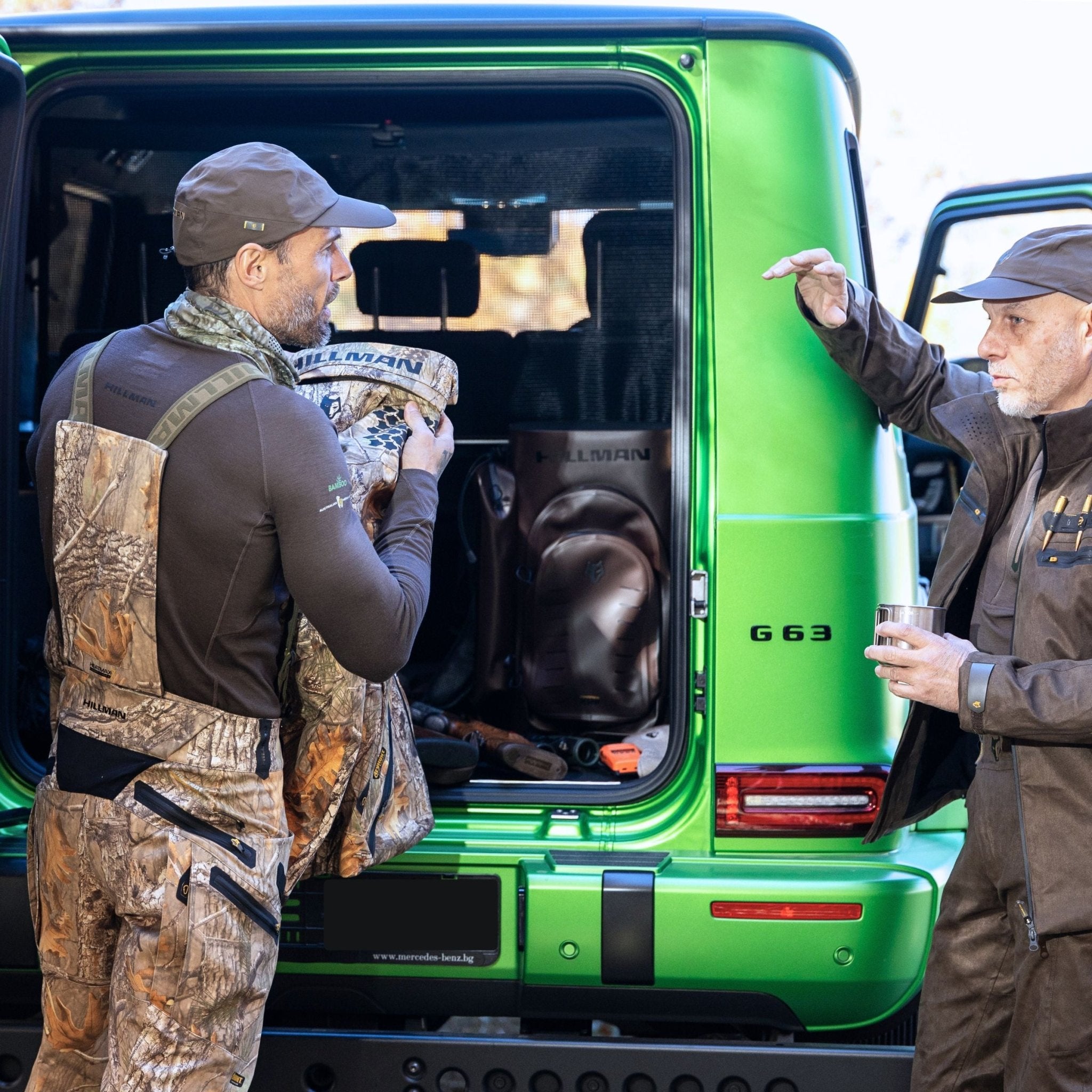
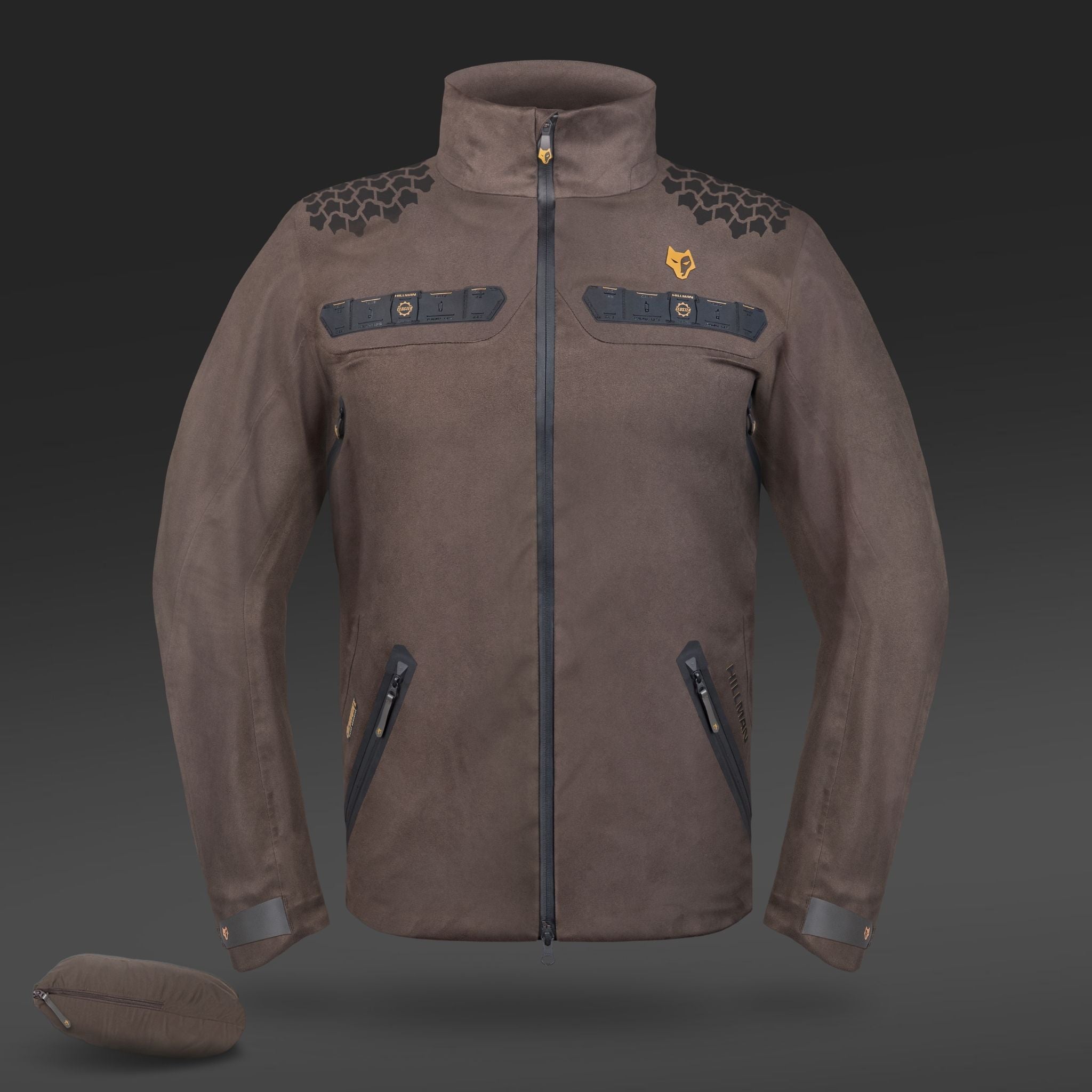
Pair them with the right jacket, boots and base layer, and the whole clothing system becomes easier to manage.
For hunters who move between stalking deer, rough shooting and general field use, stalking trousers are usually the safer buy. They may not look as formal as breeks, but they handle more situations with less fuss.
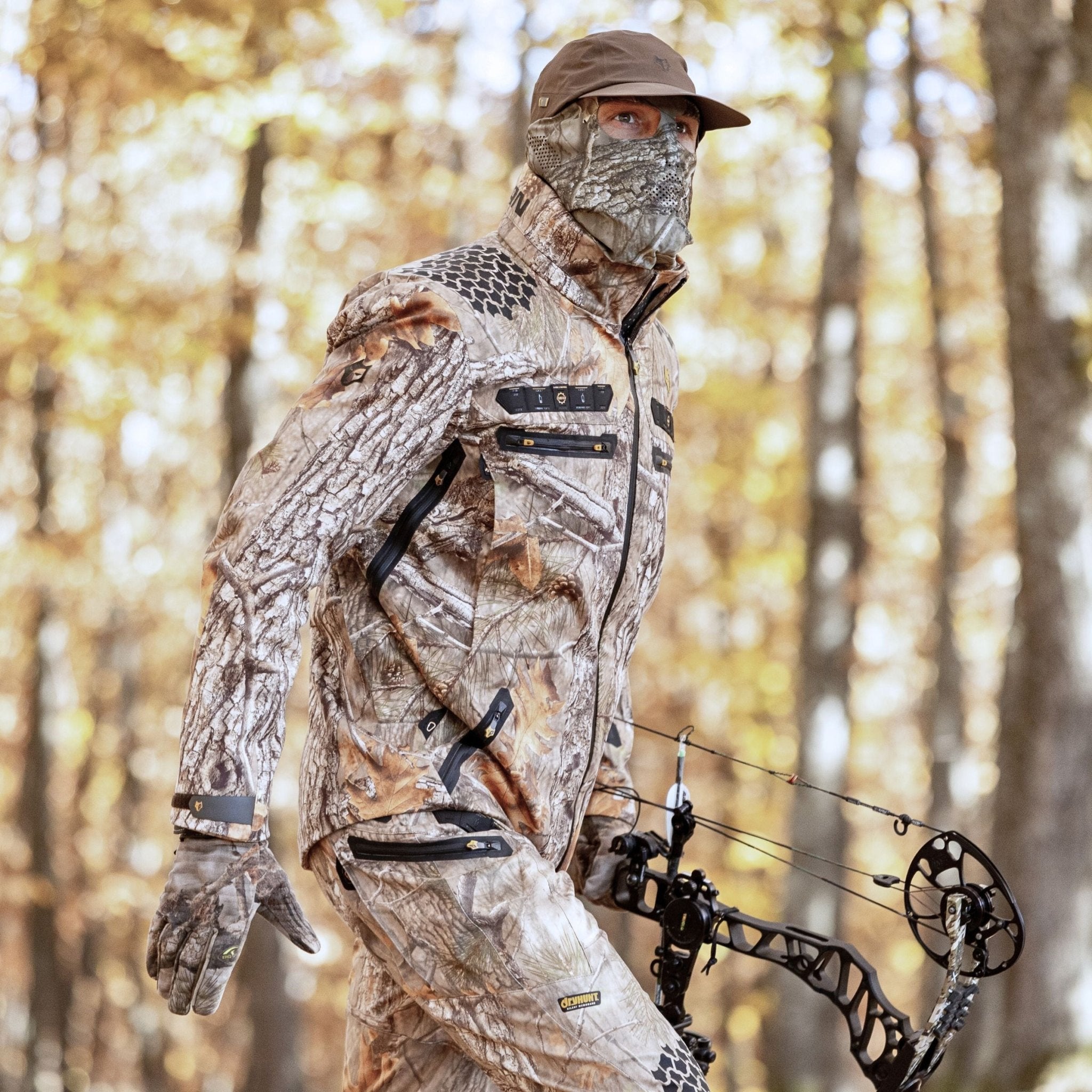
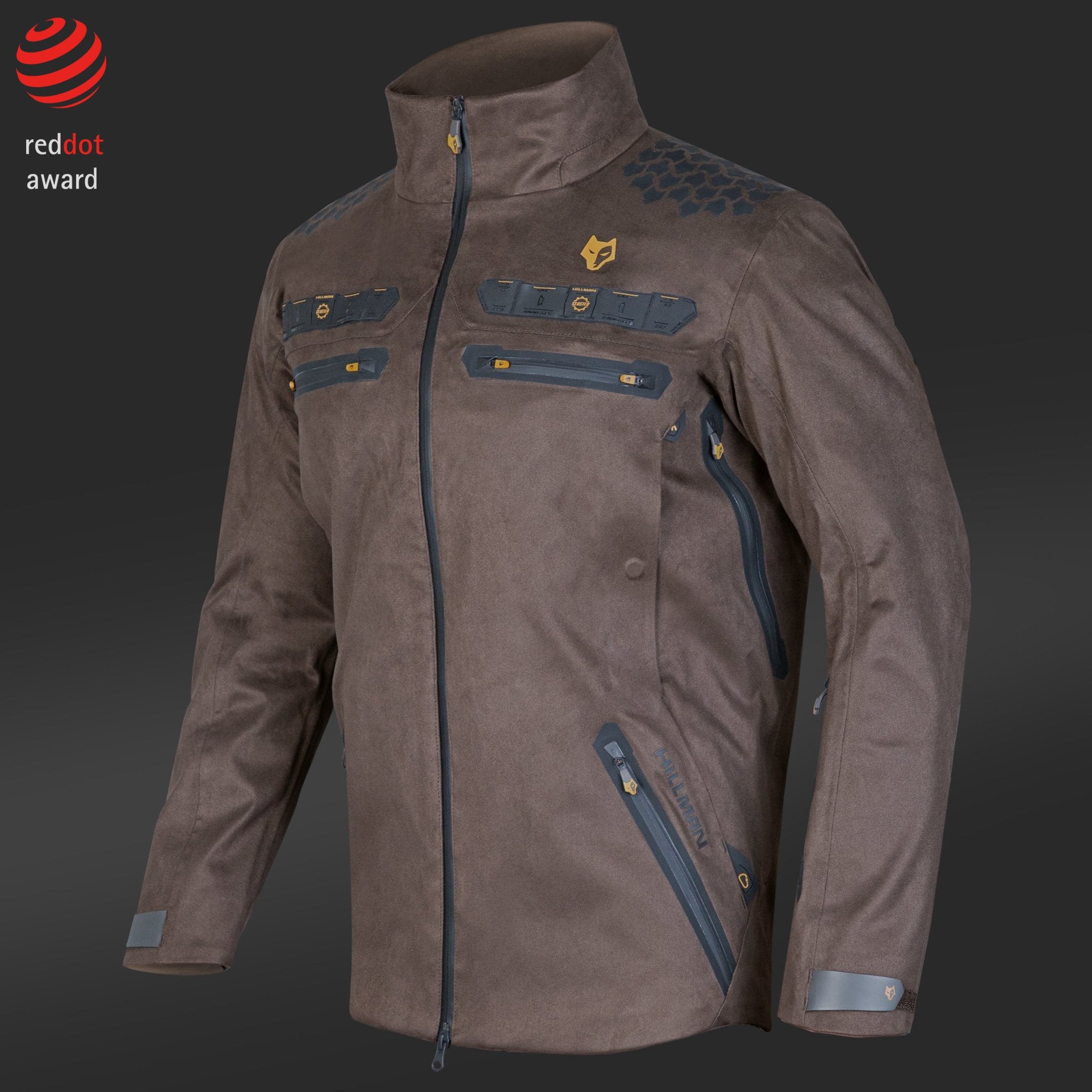
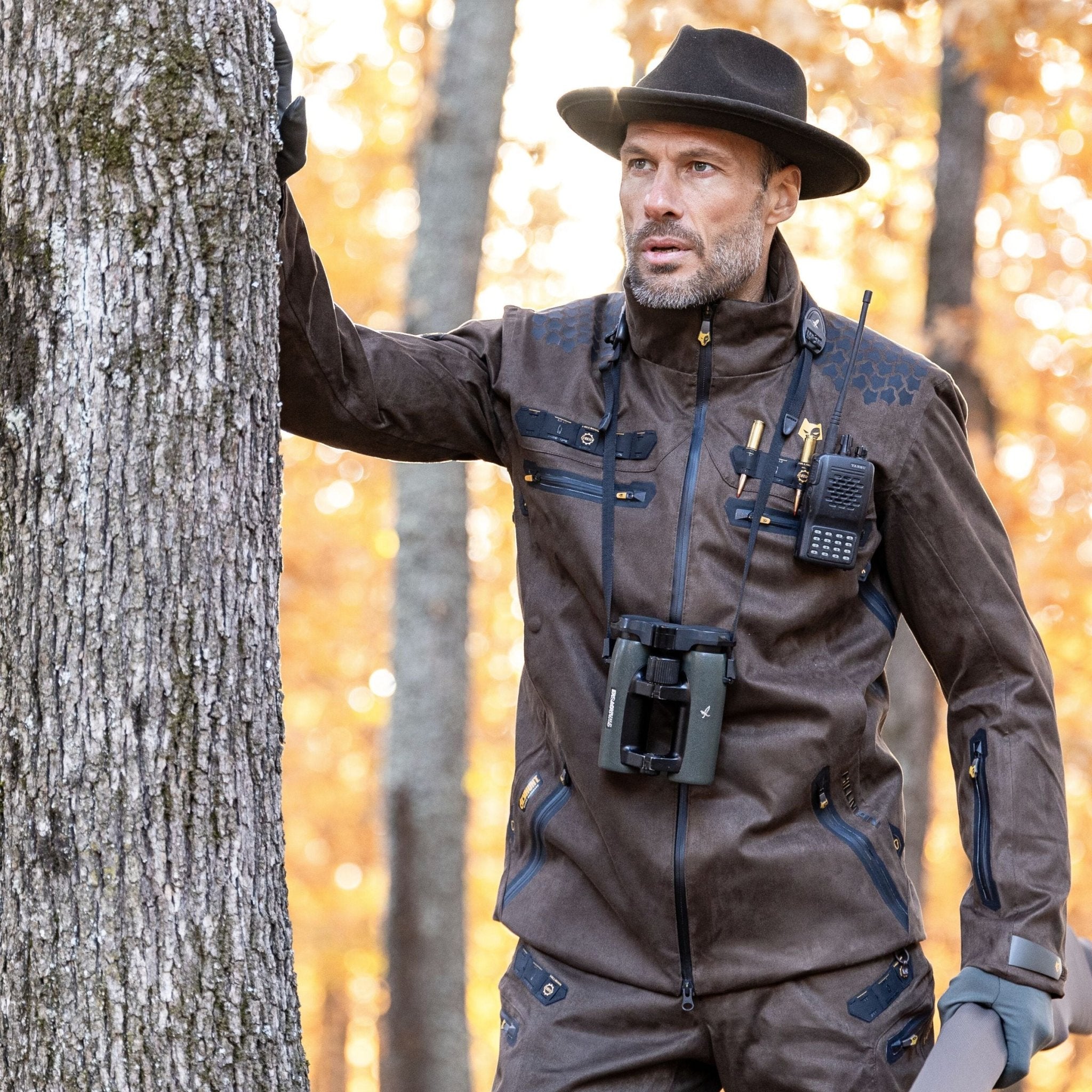
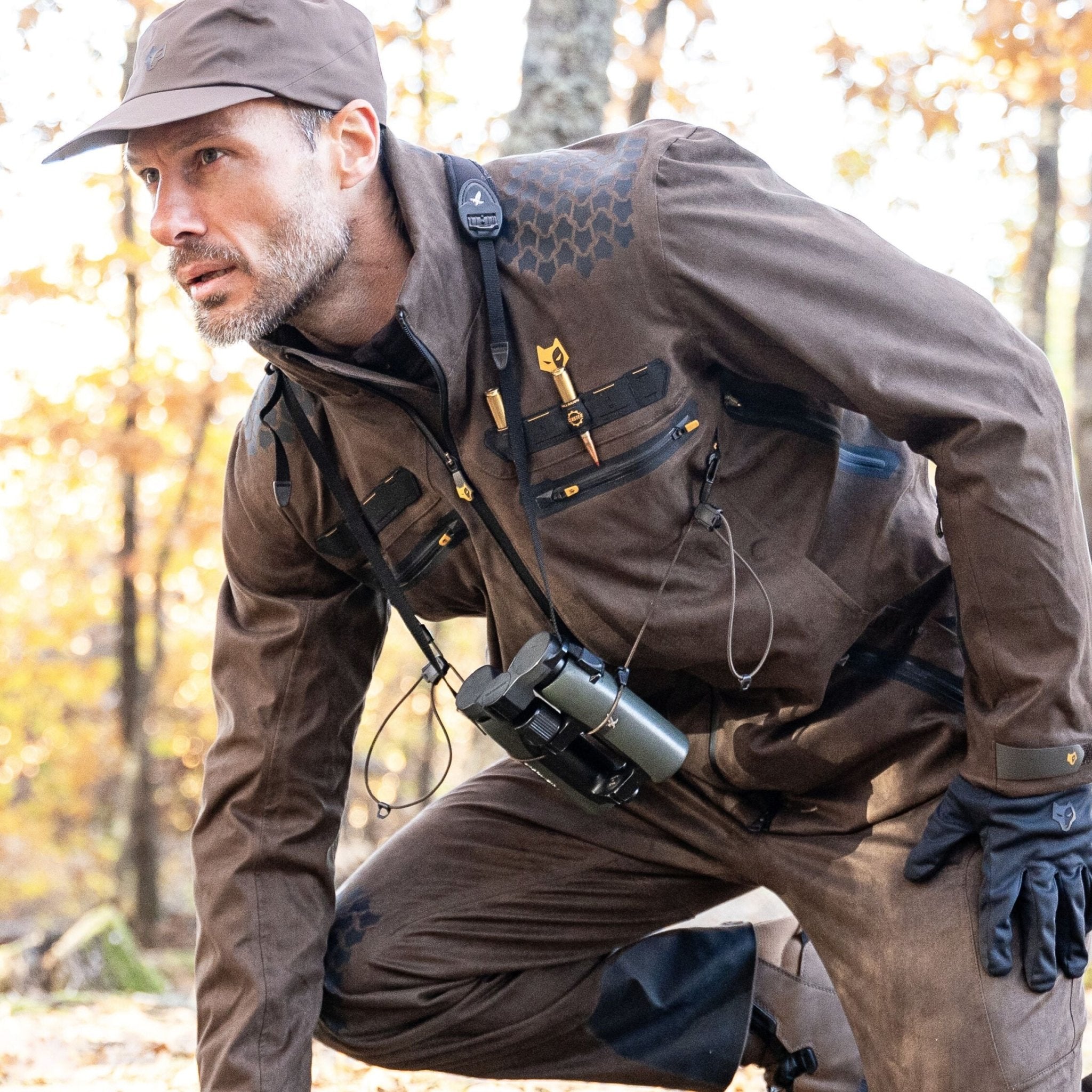
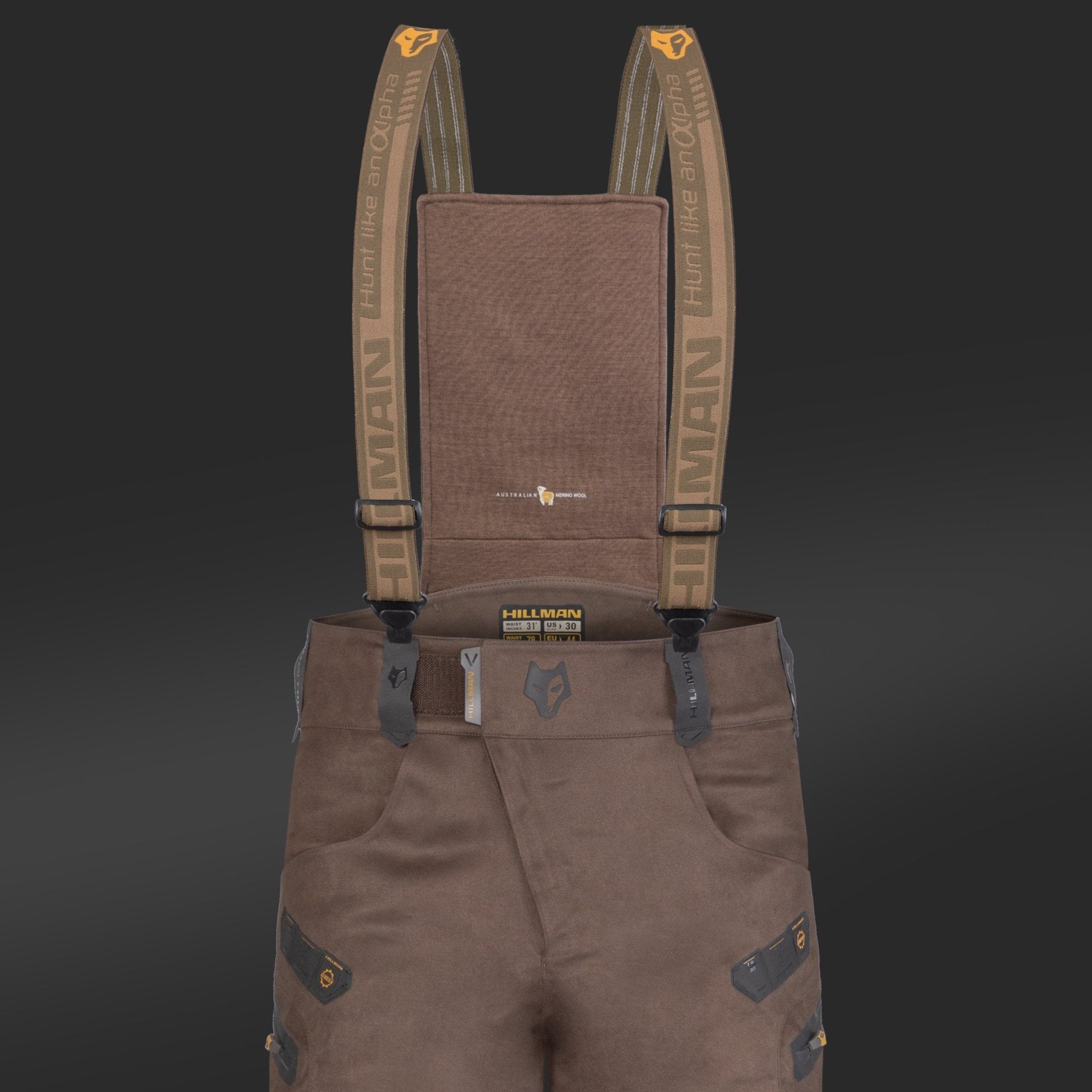
A premium pair from Hillman should feel quiet, durable, weather-protective and easy to move in. Not stiff. Not overbuilt. Not noisy. Just properly made for field use.
The Practical Verdict
In real field conditions, stalking trousers are usually more useful than shooting breeks.
They give better full-leg protection, better waterproof coverage, more freedom of movement and stronger durability in rough terrain. For deer stalking, wet woodland, crawling, kneeling, high seat access, mud, thorns and unpredictable weather, they are the stronger choice.
Shooting breeks still win in one clear setting: formal driven shooting. With Wellington boots and long socks, they are comfortable, traditional and practical. They stop wet hems and boot bunching. They suit the style of the day.
So the answer is not “breeks are bad” or “trousers are always better”. That is too simple.
The real answer is this: breeks suit the peg. Stalking trousers suit the field.
If the day is clean, formal and mostly stationary, breeks are fine. If the terrain is wet, muddy, cold, overgrown or unpredictable, full-length stalking trousers will usually keep you drier, quieter and more focused.

Share:
Red Deer Stalking on the Hill: Layers, Wind and Waterproofing