View cart
Table of Contents

In short

  • For most UK stalking days, a 25 to 40 litre pack is plenty. Go to 50 litres or more only for heavy loads or carrying game.
  • Choose quiet, soft fabric that does not rustle, and water-resistant material for British drizzle and wet grass.
  • A good hip belt and adjustable shoulder straps move the weight onto your hips, so the pack feels lighter.
  • Use the right bag for the day: a cartridge bag for driven shooting, a game bag after the drive, a backpack for long stalks.

Updated 3 November 2026

The best hunting backpack for UK stalking is a quiet, water-resistant pack of 25 to 40 litres with a hip belt that takes the weight off your shoulders and pockets you can reach without unpacking. For driven days, a cartridge bag or belt often does the job better than a backpack.

Most hunters carry more than they use. A smaller pack forces better choices and keeps you quieter.

waterproof quiet hunting backpacks, hunting bags, rucksacks for UK stalking & game shooting
waterproof quiet hunting backpacks, hunting bags for UK stalking & game shooting

What size hunting backpack do you need?

For most UK stalking days, a 25 to 40 litre pack holds food, water, a spare layer and essential kit; packed carefully, 20 to 35 litres is often enough. Go to 50 litres or more only for heavy loads, long days far from the vehicle or carrying game out. A bigger pack just tempts you to carry more.

waterproof quiet hunting backpacks, hunting bags, rucksacks for UK stalking & game shooting

Pack water, food and essential tools first. Everything else has to earn its place.

Why do hunting backpacks need quiet fabric?

Stiff nylon and plastic buckles rustle and click whenever you move or brush past cover, and deer hear it. Hunting packs use soft, brushed fabrics such as tricot that slide past clothing and branches quietly, plus quiet zip pullers and buckles. Muted colours such as green, brown, khaki or camo help the pack blend in too.

waterproof quiet hunting backpacks, hunting bags, rucksacks for UK stalking & game shooting

Test it in the shop: rub the pack against your jacket and open each zip.

How waterproof does a hunting bag need to be?

In Britain, a hunting bag mostly needs to cope with persistent drizzle, wet grass and damp air rather than downpours. A water-resistant coating or fabric keeps the contents usable for a normal day. For heavy rain or valuable kit such as optics, choose a fully waterproof pack with sealed seams and waterproof zips, or use dry bags inside.

waterproof quiet hunting backpacks, camo hunting bags, rucksacks

Noisy rain covers solve one problem and create another. Quiet fabric that resists water is better.

How should a hunting backpack fit?

A hunting backpack should carry most of the weight on your hips, not your shoulders. Tighten the hip belt over the hip bones first, then set the shoulder straps close without digging in, so the pack does not swing when you bend. A pack that sits correctly feels lighter than a lighter pack that does not.

waterproof quiet hunting backpacks, hunting bags, rucksacks for UK stalking & game shooting

Adjust it with a full load at home. An empty pack always feels fine.

Which features matter most on a hunting backpack?

The features that matter are the ones you use: small pockets for things you reach for often, hip belt pockets, a secure hands-free gun carry, hydration access and side pockets you reach without taking the pack off. A quiet, ventilated back panel helps on long walks. Extra loops and pockets you never use only add weight.

waterproof chairpacks, hunting backpacks, hunting bags, rucksacks
camo quiet hunting backpacks, hunting bags, rucksacks for UK stalking & game shooting

Keep everything in the same place every time. You will find it in the dark.

How do backpacks compare with cartridge bags and game bags?

Each bag has a different job. A cartridge bag or belt keeps cartridges at hand on driven days. A game bag carries shot birds after the drive. A hunting backpack carries food, water, layers and kit on longer stalks and rough days. Trying to make one bag do everything is the most common mistake. The table compares them.

lightweight quiet hunting backpacks, hunting bags, rucksacks for UK stalking & game shooting
Hunting backpack Cartridge bag or belt Game bag
Best for Stalking, long and rough days Driven and walked-up shooting Carrying shot game
Typical size 25 to 45 litres A day's cartridges Varies
Carries Food, water, layers, kit Cartridges only Birds or small game
Hands-free Yes Belt yes, bag on the shoulder Over the shoulder

Many people who shoot and stalk own all three and pick by the day.

Which Hillman backpacks suit UK hunts?

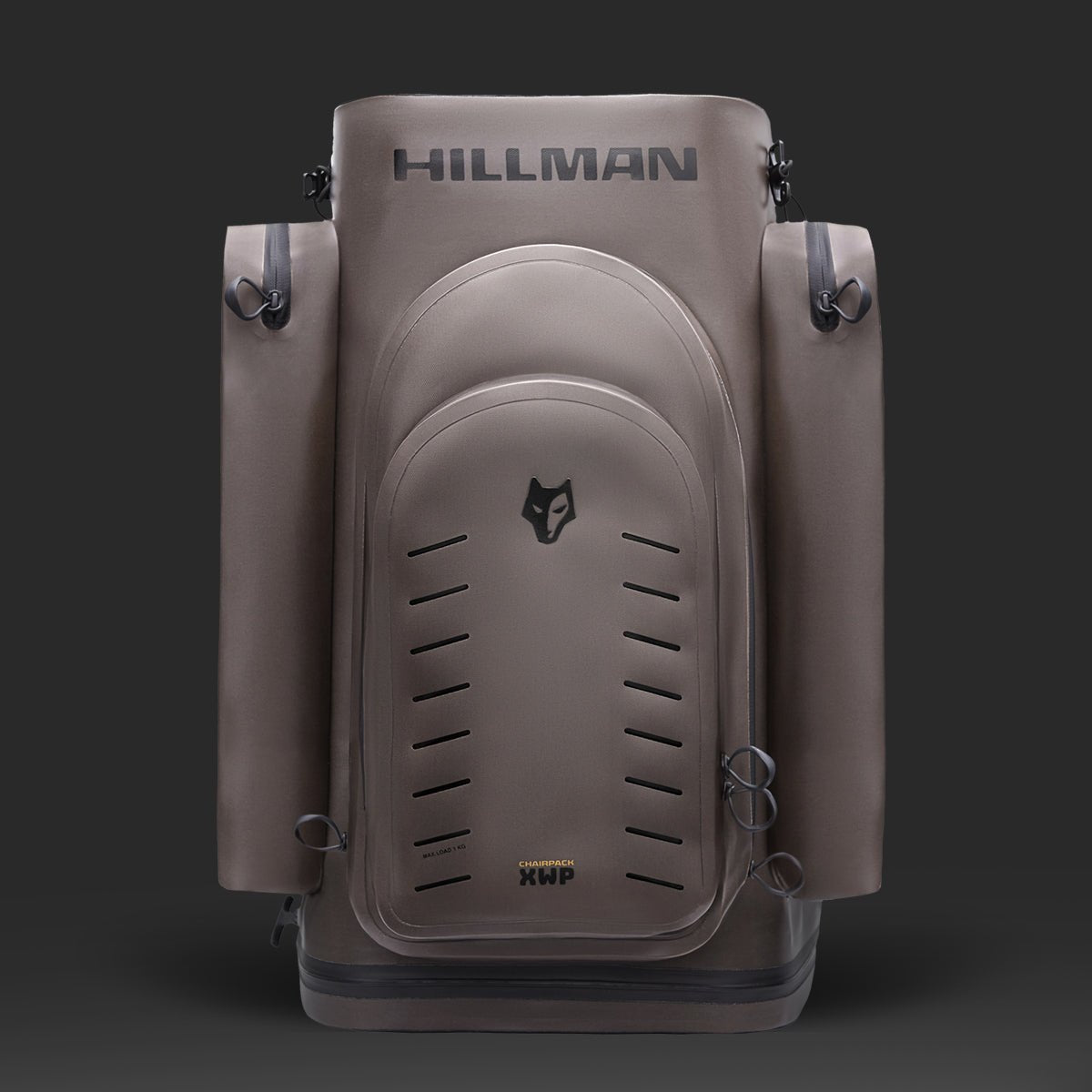
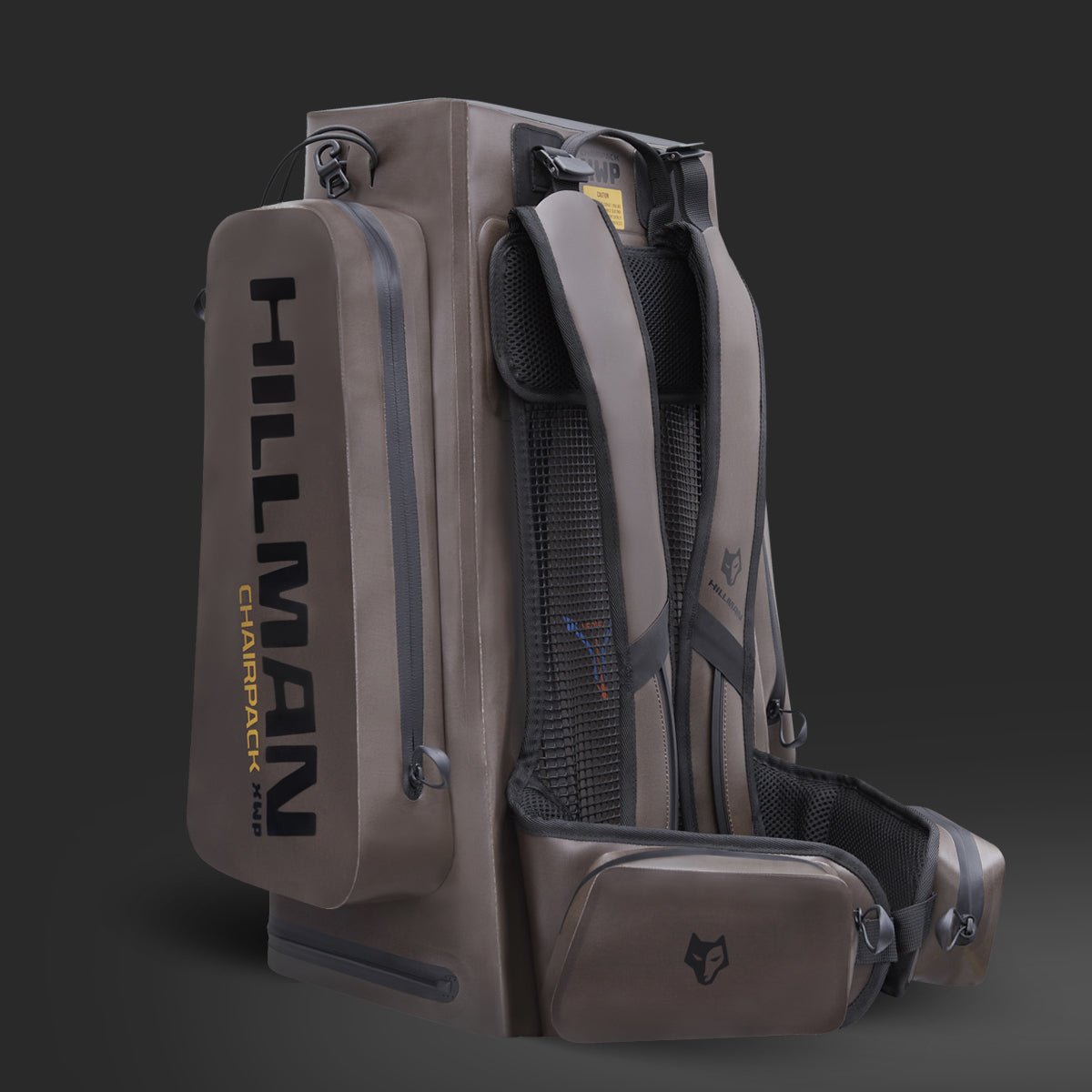
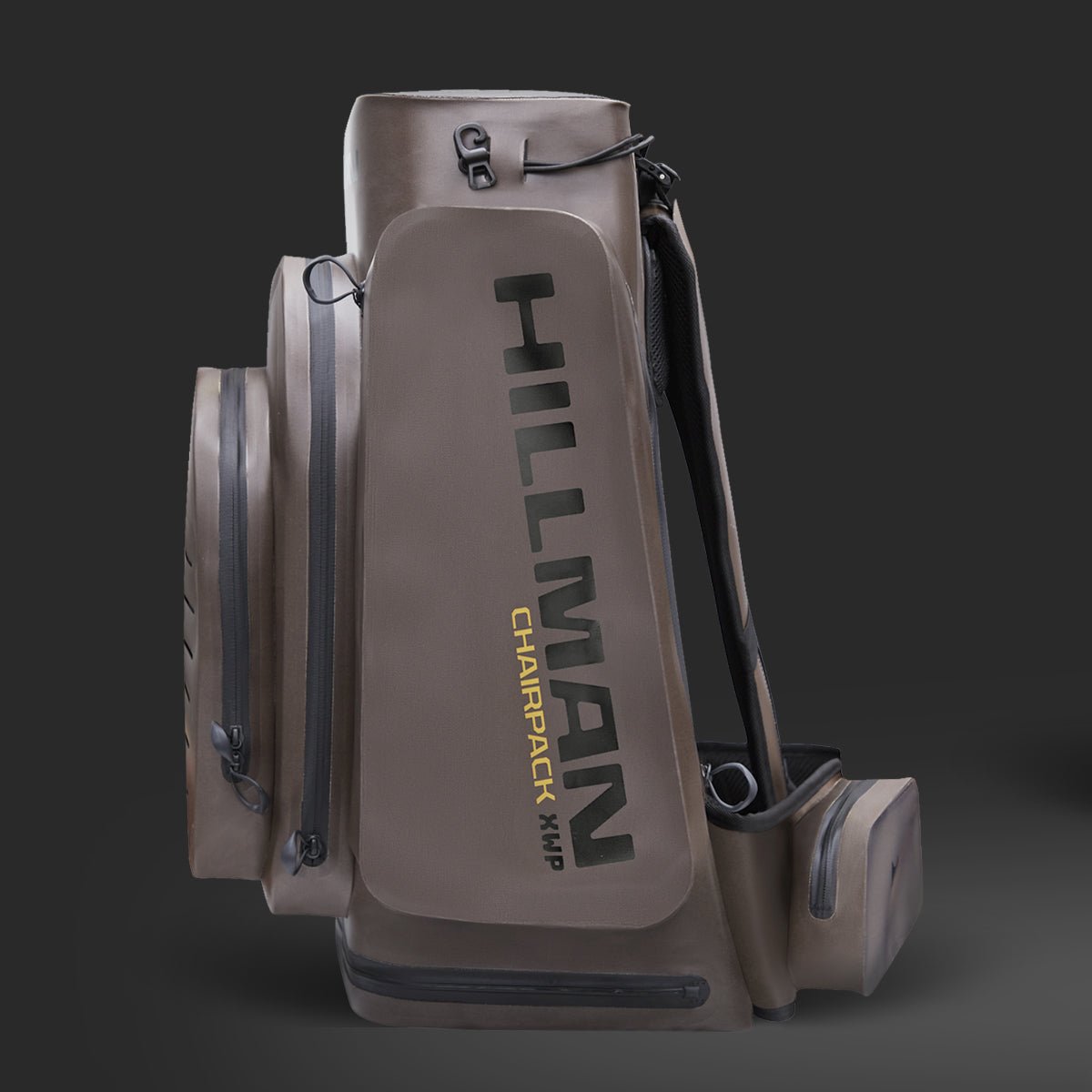
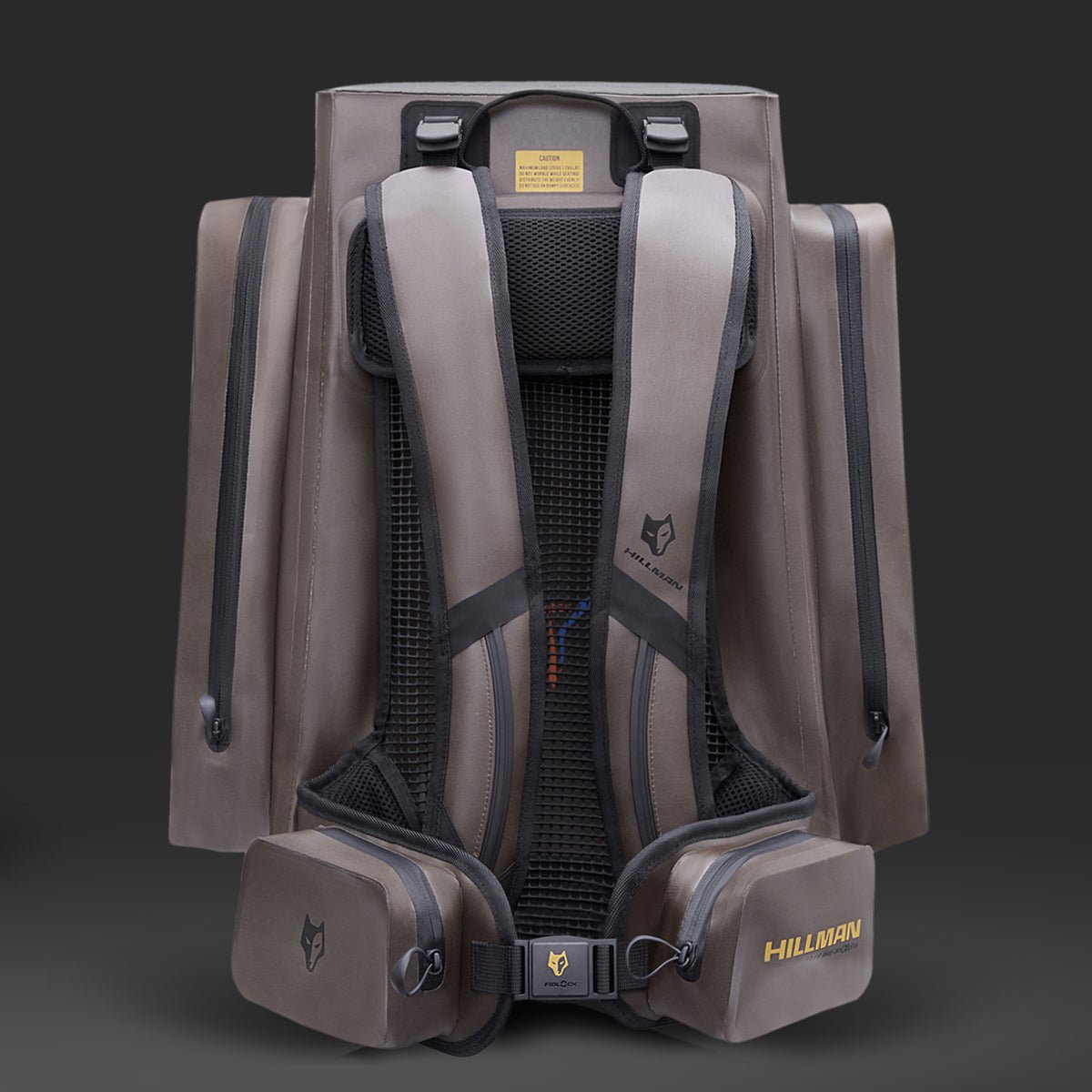
The ARGO hunting backpack (£45) comes in 25, 35 or 45 litres, in green or camo, with a light, wear-resistant Dura-tex fabric, a waterproof polyurethane coating, two large side pockets and a reinforced bottom. The Chairpack XWP40 (£399) is a waterproof pack with a built-in chair frame rated to 129 kg, YKK waterproof zips and a gun-carrying system.

quiet hunting backpacks, waterproof hunting bags, rucksacks

The Chairpack weighs 2.92 kg, has a 55 cm seat height and fits backs of 43 to 49 cm. For driven days, the Hillman cartridge belt (£33.90) comes in forest green or camo. Prices and sizes as listed on hillmanhunting.co.uk on 31 October 2026. Check the product page before you order.

Frequently asked questions

What is the best size backpack for deer stalking?

25 to 40 litres for most days. Choose 45 litres or more if you need to carry game out.

Can I use a hiking backpack for hunting?

On a footpath, yes. In cover and on stalks, most hiking packs are too noisy and shift when you stop or bend.

Do I need a waterproof hunting backpack?

For most UK days, water-resistant is enough. For heavy rain or optics, choose waterproof or use dry bags inside.

How do I stop my pack rubbing on long walks?

Put the weight on the hip belt, tighten the shoulder straps just enough, and pack heavy items close to your back.

Oliver Grant
Author

Oliver Grant

Deer Stalking Guide / Woodland Fieldcraft Specialist

Oliver writes about stealth-focused hunting equipment built for woodland stalking and close-range movement. He specialises in silent fabrics, camouflage layering, moisture control, and lightweight gear designed for difficult UK terrain.

 Related blog posts

deer gralloch clothing, deer stalking clothing, waterproof stalking trousers, washable stalking jacket, boots, stalking gloves, outer, mid layers

How to Dress for Deer Gralloching and Drag-Outs

Protecting your primary stalking clothing during deer gralloching and drag-outs requires combining silent, breathable outer layers with packable protective barriers. Deploying long disposable gloves, waterproof aprons, or packable chaps after the shot stops blood and mud from soaking into waistlines, cuffs, and mid-layers while kneeling. Using a dedicated drag harness further minimizes kit damage and fatigue, ensuring your technical stalking gear stays clean and functional for future outings.

Read moreabout How to Dress for Deer Gralloching and Drag-Outs

clay shooting clothing: shooting vest, shooting jacket UK, clay pigeon shooting trousers, game shooting footwear, base layers, t-shirt, cartridge bags

What to Wear for Clay Shooting Practice Before Game Season

Preparing for the game season on the clay line requires clothing that prioritizes unrestricted shoulder movement, consistent gun mount, and essential safety. Wearing dedicated shooting vests or non-restrictive jackets with padded recoil zones ensures comfort across high-volume rounds, while stable footwear, eye protection, and ear defenders keep you safe and grounded. Practicing in weather-appropriate, non-bulky layers bridges the gap between target practice and field performance, ensuring your technique translates seamlessly to game days.

Read moreabout What to Wear for Clay Shooting Practice Before Game Season

waterproof shooting gloves for driven day hunting, warm shooting gloves, stalking gloves, wildfowling gloves, game shooting accessories, mittens

How to Choose Shooting Gloves for Driven Days, Wildfowling

Selecting the ideal shooting gloves requires balancing warmth, grip, and trigger sensitivity tailored to the specific discipline and weather conditions. Driven days benefit from fitted leather or slim insulated gloves that offer safety feel and smart presentation, while stalking calls for quiet, lightweight stretch gloves that allow effortless operation of optics and rifle controls. For severe wildfowling conditions, durable waterproof gloves or fold-back shooting mittens provide critical protection against cold wind, salt water, and foreshore mud without compromising dexterity.

Read moreabout How to Choose Shooting Gloves for Driven Days, Wildfowling

FAQs

What to carry in a hunting backpack?

You end up carrying the same basics most days. Water, something to eat, an extra layer in case you stop moving. Gloves or a hat depending on the weather. Then the small bits you don’t think about until you need them, knife, ammo, something for direction. It’s never much, but when something’s missing, you feel it straight away.

What features are essential for a good hunting pack?

Fit is where it starts. If it doesn’t sit right, nothing else really matters. After that it’s how the weight feels once you’ve been walking a while, whether it stays close to your back or starts pulling. Quiet fabric helps more than you’d expect. The rest is just simple things that don’t get in your way.

How to pack a hunting backpack properly?

Heavier stuff close to your back, that’s what keeps it from shifting around. Everything else just needs to be where you can get to it without thinking too much. If you’re stopping and digging every time, it’s not set up right.

What is the best hunting backpack?

The one that doesn’t move around and doesn’t keep reminding you it’s there. People look at size and features, but it usually comes down to how it sits when you’re actually out walking. If it feels steady, you’re on the right track.
How to pick the right hunting backpack?

Think about how you actually use it, not what you think you might need. Short days are simpler than people expect. Longer ones, you start noticing support more than space. Fit ends up deciding everything in the end.
How to choose a hunting backpack?

You look at size first, then how it carries once there’s weight in it. Straps, back panel, how it settles when you move. Features can look good, but most of them don’t matter if you don’t use them out there.

How to wash a hunting backpack?

Nothing complicated. Bit of warm water, soft brush, that’s usually enough. Let it dry on its own. Most of the time you’re just getting rid of mud and dirt anyway.