
In short
- DryHunt 2.0 is uninsulated: spring, summer and most of the autumn, and any day you walk a lot.
- Aerogel 2.0 is insulated: winter high seats, frosty driven days and long waits in the cold.
- Socks move the line. With merino socks, Hillman rates the DryHunt 2.0 down to -15°C.
- Most cold feet in a good boot come from sweat or a tight fit, not from too little insulation.
- For a wet driven day with little walking, a pair of wellies can be the honest answer.
By Mathew Collins · Updated 3 November 2026
Choose the DryHunt 2.0 if you walk most of the day or hunt from April to November, and the Aerogel 2.0 if you sit or stand still in frost. If you can only own one pair in the UK, the DryHunt 2.0 with warm merino socks covers more of the year.
The real question is not the temperature on the forecast. It is how much you will move.
When do you need insulated hunting boots in the UK?
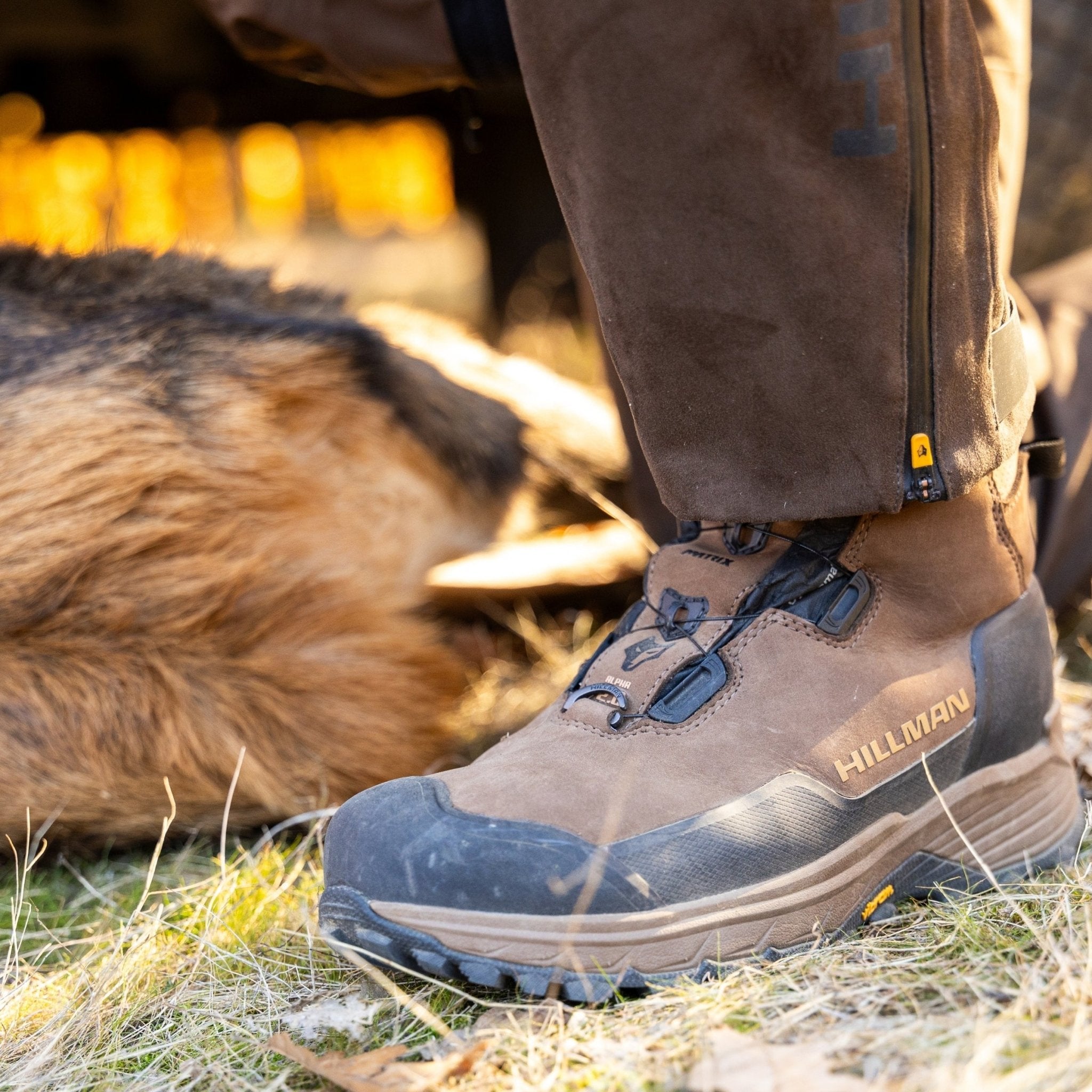
You need insulated boots when you stand or sit still for an hour or more at around freezing: a winter high seat, a frosty peg on a driven day, a dawn wait for roe. If you keep walking, as on a hill stalk or a rough shoot, an uninsulated boot keeps your feet warm enough.
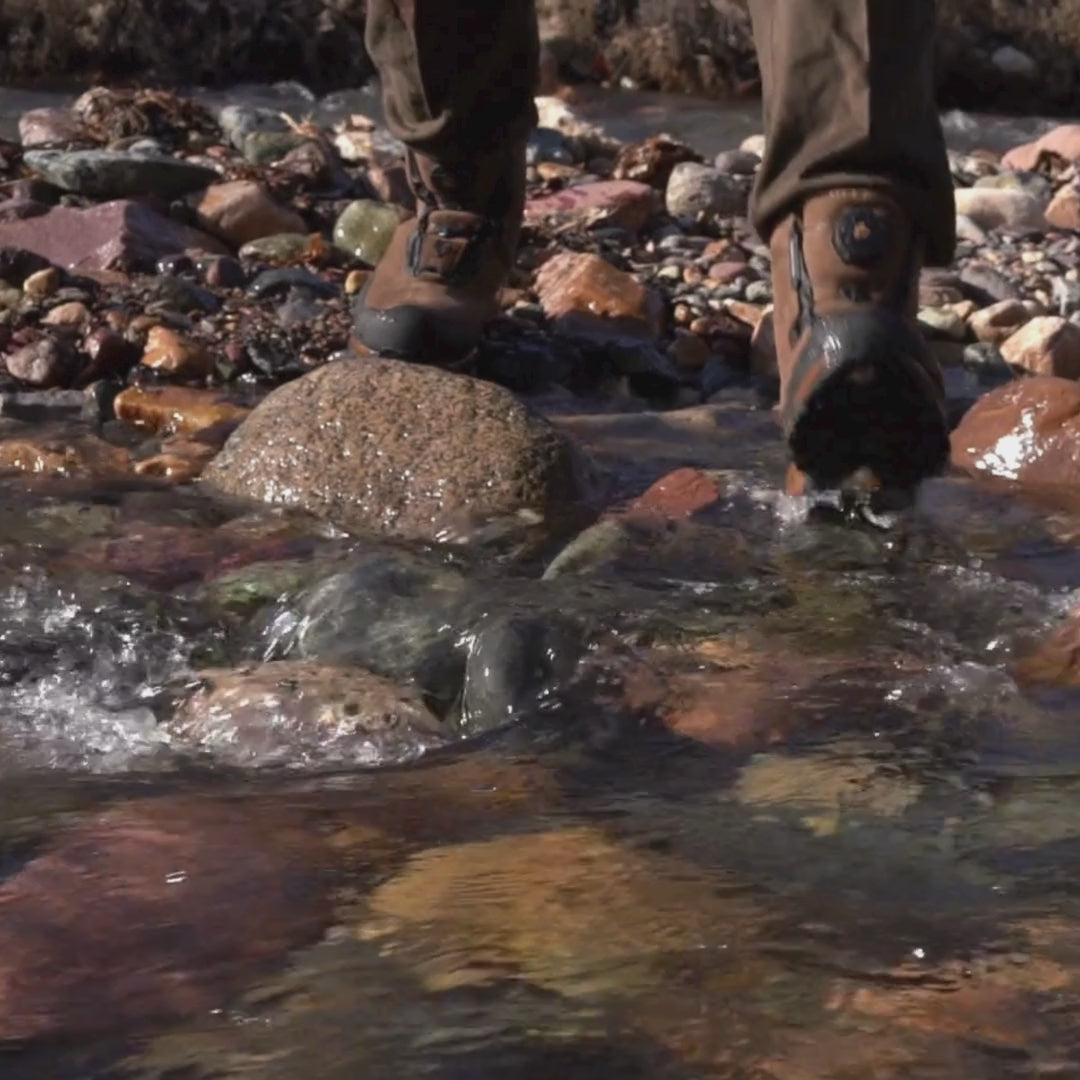
A British winter is wet more often than it is truly cold, so waterproofing matters every month of the year.
Why do your feet get cold in waterproof boots?
Feet usually get cold because they are damp or squeezed, not because the boot lacks insulation. Sweat from the walk in soaks your socks, and once you stop, that moisture draws heat away. Laces pulled too tight or socks too thick for the boot cut blood flow, and cold toes follow within the hour.
Walk in steadily rather than fast, loosen the laces a touch when you settle, and never wear cotton socks.
How do the DryHunt 2.0 and Aerogel 2.0 differ?
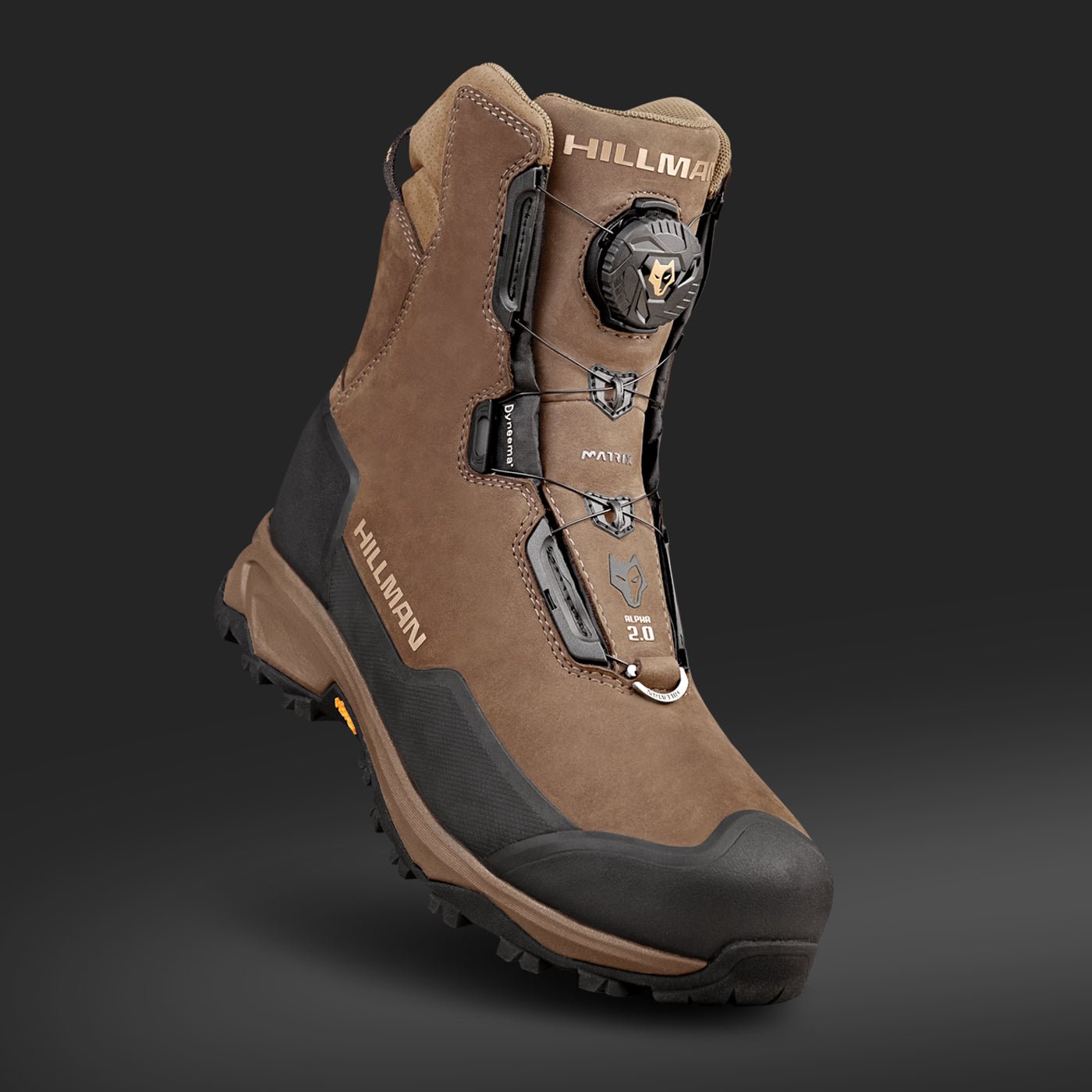
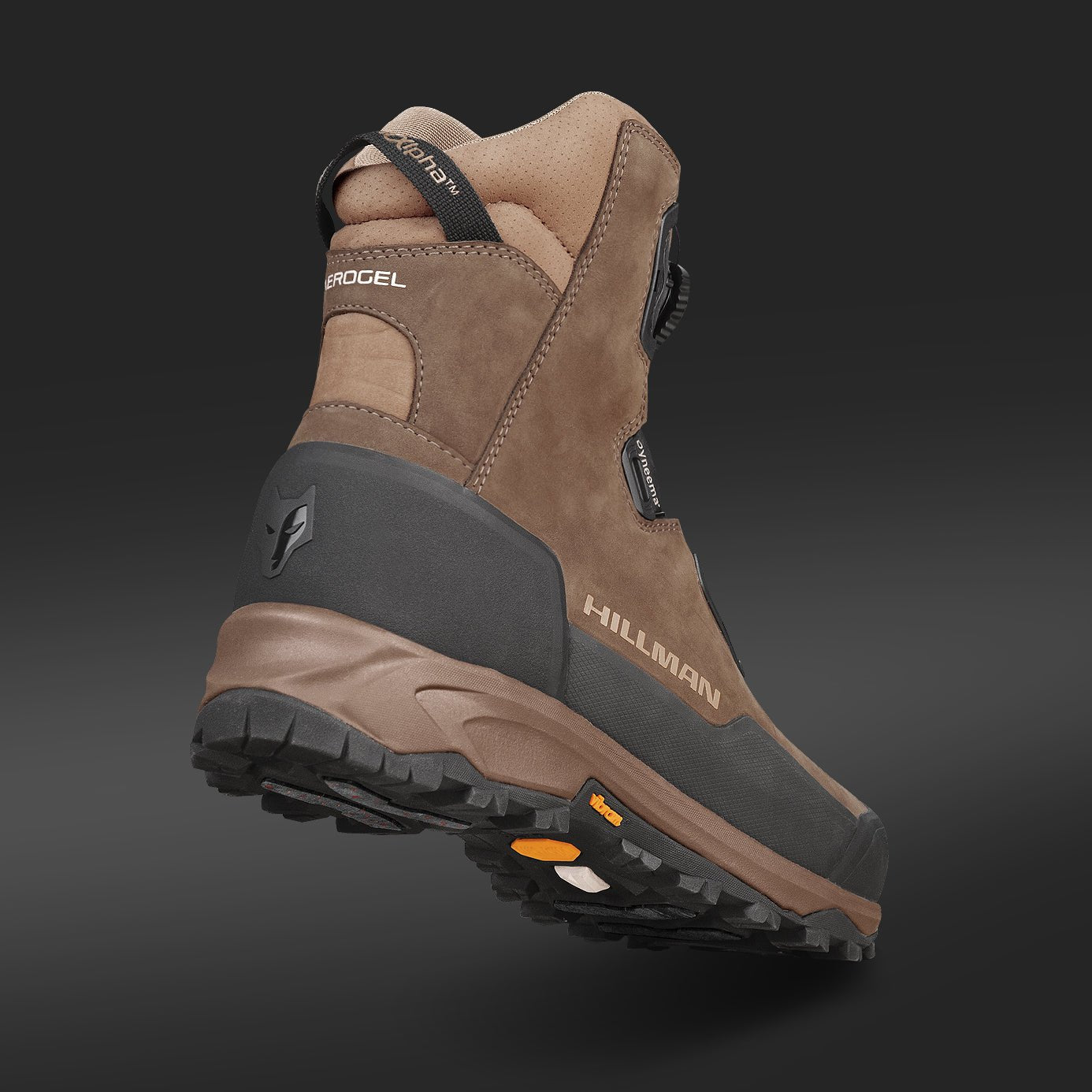
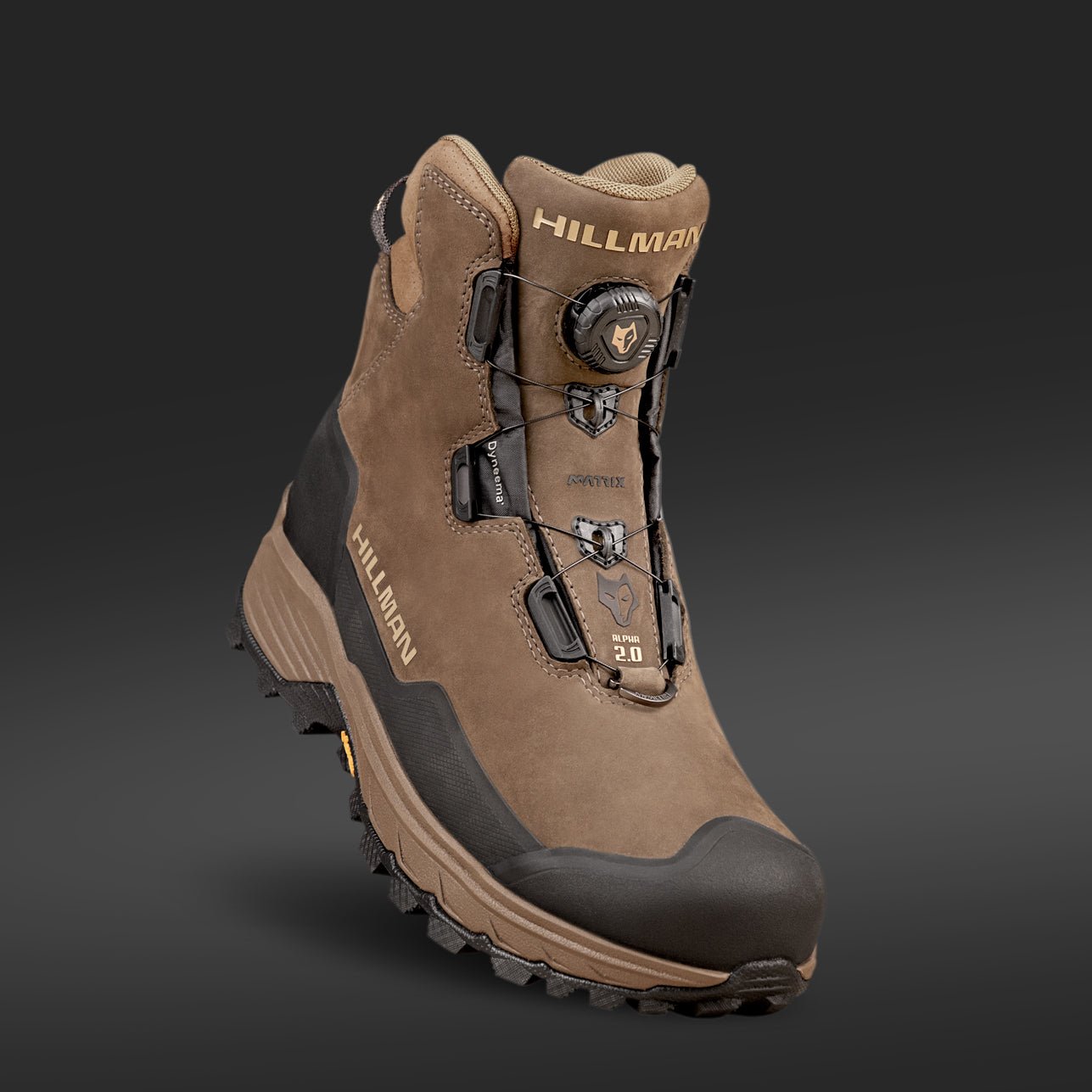
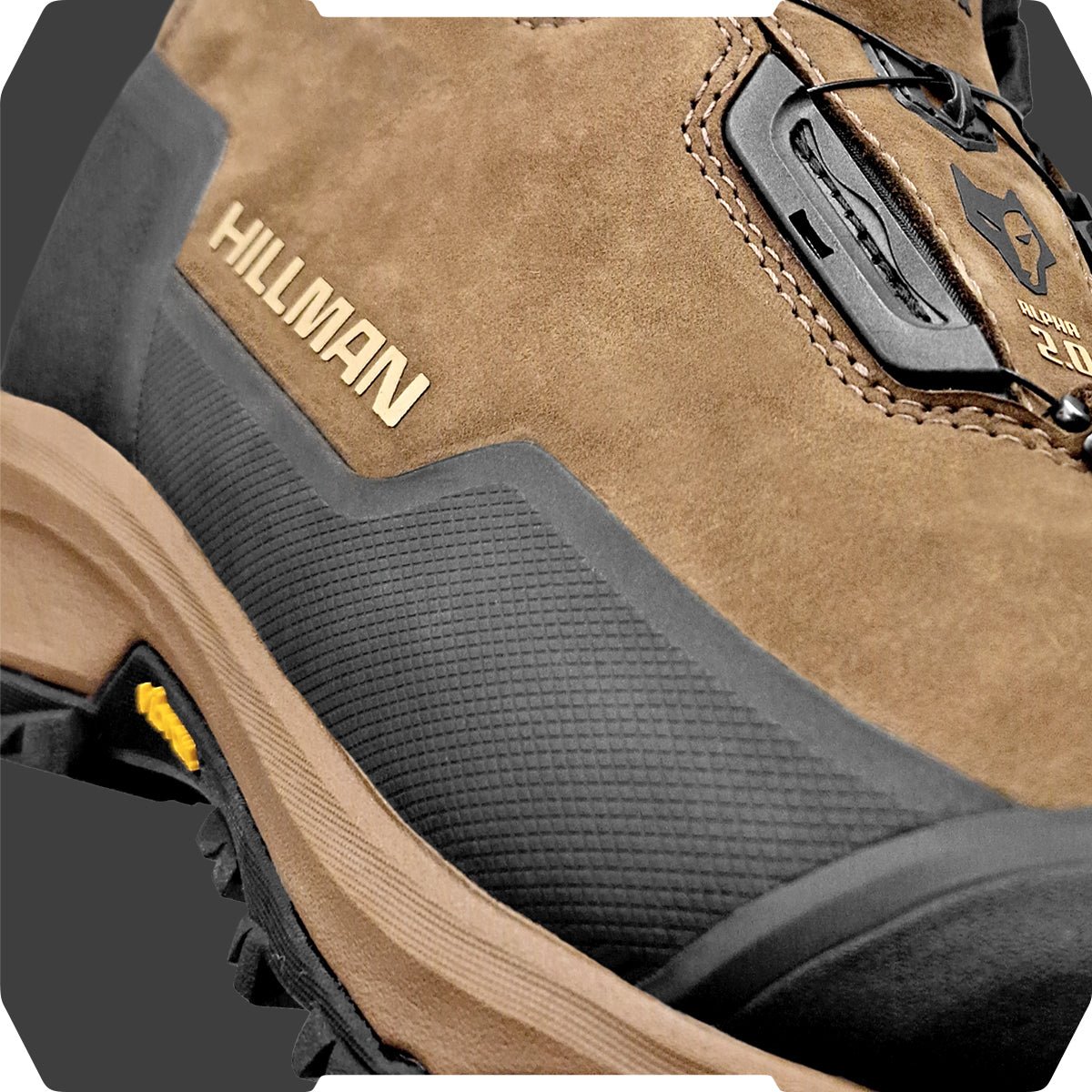
Both boots share the DryHunt membrane, full-grain Italian leather, Dyneema reinforcement and the FREELOCK lacing with 1 mm stainless steel wire. The difference is warmth and grip. The DryHunt 2.0 is uninsulated, with a Vibram MegaGrip sole. The Aerogel 2.0 adds Aerogel and Matrix insulation and a Vibram Arctic Grip sole for wet ice.
| DryHunt 2.0 (uninsulated) | Aerogel 2.0 (insulated) | |
|---|---|---|
| Insulation | None | Aerogel and Matrix, 17.5 g per boot |
| Lowest temperature Hillman lists | -5°C; -15°C with Ultrawarm socks | -30°C |
| Sole | Vibram MegaGrip | Vibram Arctic Grip |
| Best for | Spring to autumn, long walks, stalking on the hill | Winter seats, frosty pegs, long still waits |
| Wide fit (EE) | Yes, 7 EE to 13 EE | Yes, 7 EE to 13 EE |
Both are listed as ready to wear with no breaking-in period.
Which boot for which season?
From April to September, wear the uninsulated DryHunt 2.0: roe buck stalking, summer evenings on a high seat and long walks over wet ground. In October and November, keep the DryHunt 2.0 and add thicker merino socks. From December to February, or whenever you will sit still in frost, switch to the Aerogel 2.0.
| Season | Typical outing | Boot | Socks |
|---|---|---|---|
| Spring and summer | Roe buck stalking, evening seat | DryHunt 2.0 | Light merino |
| Autumn | Deer stalking, early driven days, rough shooting | DryHunt 2.0 | Ultrawarm merino |
| Winter | High seat at dawn, driven days in frost | Aerogel 2.0 | Ultrawarm merino |
| Winter, walking | Hill stalk, beating, rough shoot | DryHunt 2.0 | Ultrawarm merino |
If you run hot or walk hard, lean towards the DryHunt 2.0 even in winter. If you feel the cold, start on the Aerogel 2.0 earlier.
How much do socks change the temperature range?
A great deal. Hillman rates the uninsulated DryHunt 2.0 to -5°C on its own and to -15°C with its Ultrawarm merino socks. Merino keeps working when it is damp from sweat, while cotton turns cold and clammy. Make sure the boot still fits comfortably with the thicker sock, or the extra warmth is lost to a tight fit.
Pack a spare pair. Changing into dry socks before a long wait does more than any boot upgrade.
Leather boots or wellies: how do they compare for shooting?
Wellies are fully waterproof, cheap and quick to pull on, and for a driven day where you stand on a wet peg and barely walk, they are a sensible choice. Neoprene-lined wellies add warmth. Their weak points are ankle support, grip on steep ground and sweat, because rubber does not breathe at all.
| Uninsulated leather boot | Insulated leather boot | Wellies | Neoprene-lined wellies | |
|---|---|---|---|---|
| Waterproof | Through the membrane | Through the membrane | Fully, to the top | Fully, to the top |
| Breathes | Yes | Yes | No | No |
| Ankle support on the hill | Good | Good | Poor | Poor |
| Warm when still | Low | High | Low | Medium to high |
| Best for | Stalking, walking days | Winter seats and pegs | Wet pegs, little walking | Cold, wet pegs |
For a stalk across the hill, a leather boot wins easily. For a wet day spent mostly standing, wellies are hard to beat on cost.
Which Hillman boots and socks should you choose?
Pick the boot by how much you walk and how long you sit still, then pick the width and the socks. Most UK hunters who stalk all year start with the DryHunt 2.0 and add the Aerogel 2.0 for winter. Both boots also come in a wide EE fit for broader feet.
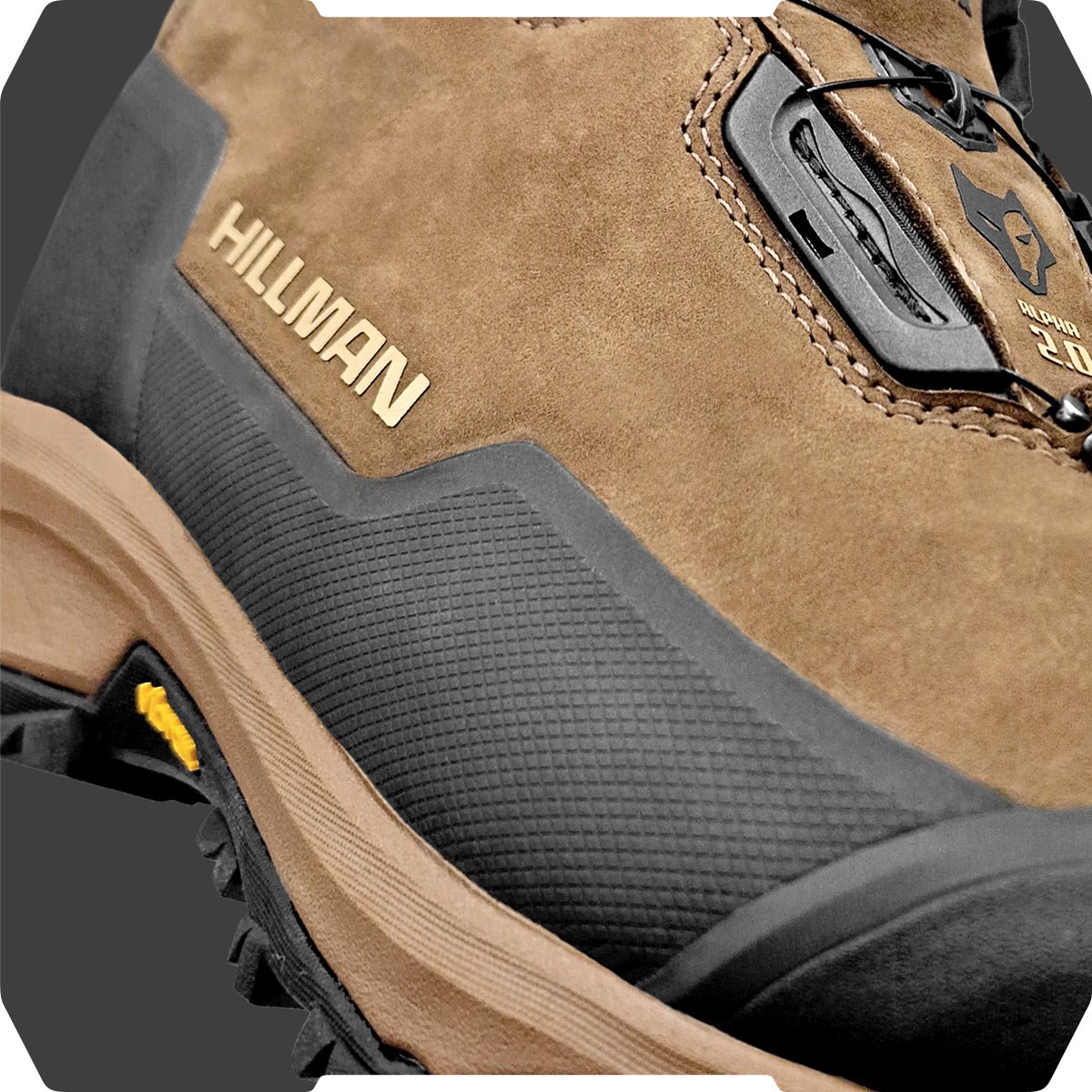
- Hunting Boots Waterproof Lightweight - Uninsulated DryHunt 2: uninsulated, rated to -5°C or -15°C with Ultrawarm socks, Vibram MegaGrip sole, Durashield moulded rubber protection all round, H-Flex insole.
- Hunting Boots Insulated - Aerogel 2.0: Aerogel and Matrix insulation rated to -30°C, waterproof when standing in water up to 13 cm deep, Vibram Arctic Grip sole, ventilated memory foam collar.
- Wide Fit Waterproof Hunting Boots - DryHunt 2.0 and Wide Fit Insulated Hunting Boots - Aerogel 2.0: the same boots in EE width, sizes 7 EE to 13 EE.
- Ultrawarm merino hunting socks: Australian merino with nylon reinforcement and anti-slip silicone prints. Hillman lists them for -10°C to 15°C in uninsulated boots and 15°C down to -30°C in insulated ones. Sizes M (UK 5.5-7), L (UK 7.5-10) and XL (UK 10.5-13.5).
For a wider look at waterproof boots, read our guide to the best waterproof hunting boots in the UK.
Frequently asked questions
Can I wear the Aerogel 2.0 in autumn?
Yes, on cold mornings when you sit still. On a warm day with a lot of walking, your feet may sweat, and the DryHunt 2.0 is the better pick.
Is the DryHunt 2.0 warm enough for a winter driven day?
On a mild, damp day with Ultrawarm socks, often yes. On a frosty peg where you stand still for long drives, the Aerogel 2.0 is the safer choice.
Should I size up for thick winter socks?
Try the boot on with the socks you will wear. Your toes need room to move and your heel should not lift.
Do I still need wellies?
Some days, yes. For a wet peg with almost no walking, they are cheap and fully waterproof.






Share:
Wildfowling Clothing for Mud, Wind, Waits on the Foreshore
What to Wear Stalking: A UK Layering Guide by Temperature